walking upstream…
Guy Clark
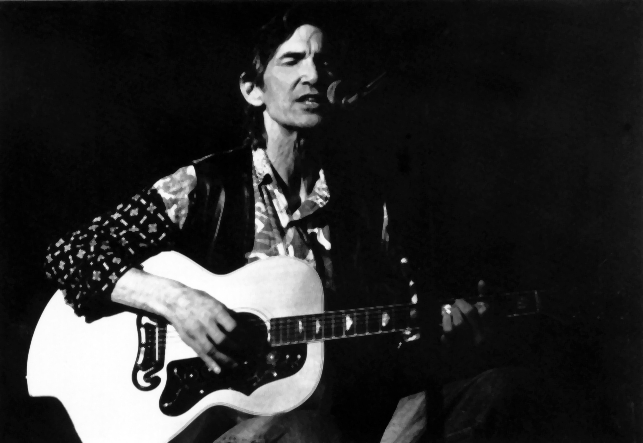


sourcesWikipedia · PBS Ken Burns Country Music · Houston Press
Guy Charles Clark was born in 1941 in Monahans, Texas, and raised partly by a grandmother who ran the town hotel, in a household that read poetry aloud at the dinner table in place of television. He learned guitar as a teenager, worked the Houston folk circuit in the early 1960s alongside Townes Van Zandt, and moved to Nashville in 1971 with his wife and fellow songwriter Susanna, where their home became a gathering place for writers like Rodney Crowell and Emmylou Harris. His 1975 debut, 'Old No. 1,' arrived after Jerry Jeff Walker had already turned Clark's 'L.A. Freeway' into a hit, and its imagistic, plainspoken songs — especially 'Desperados Waiting for a Train' — helped define the Texas troubadour tradition that fed directly into Americana. He died in Nashville in 2016.
the sound in question
1975
Desperados Waiting for a TrainGuy Clark
walk the tributaries ↓
Townes Van Zandt1970s · Folk / Progressive Country / Country Blues
Clark met Van Zandt in the Houston folk scene in the early 1960s, and biographers describe how 'Townes's compositions inspired Guy to try his hand at writing,' with the two encouraging each other and listening to recordings of the poet Dylan Thomas together for inspiration. The friendship lasted until Van Zandt's death in 1997, and Clark kept his songs in regular rotation on his own albums — a pull toward the spare, devastating personal narrative that Clark's own writing shares.
listen: upstream & here
1972
Pancho and LeftyTownes Van Zandt
1983
The Randall KnifeGuy Clark
listen forCompare 'Pancho and Lefty' with 'The Randall Knife' — both let a wrenching personal story land through plain, unhurried description rather than any big vocal swell, trusting the details themselves to carry the grief.
Lightnin' Hopkins1940s-60s · Country Blues / Electric Blues / Texas Blues
Working the Houston folk circuit in the early 1960s, Clark watched Lightnin' Hopkins perform and later reflected on what set him and fellow bluesman Mance Lipscomb apart: 'they were writing songs — about themselves and their experiences,' Clark said, calling them 'the real-deal blues singers' whose lives were the subject of their songs. He added that 'the thing that I gleaned from them was that you can write your own story, whatever it is' — a direct model for the autobiographical, first-person songwriting Clark would build his career on.
listen: upstream & heresource: Acoustic Guitar ↗
1960
Mojo HandLightnin' Hopkins
1976
Texas Cookin'Guy Clark
listen forPlay 'Mojo Hand' next to 'Texas Cookin'' — both ride a loose, conversational blues groove where the guitar leaves plenty of room around a talk-singing vocal recounting the singer's own life rather than a stock character's.
Mance Lipscomb1960s · Texas blues / Country blues / Songster
Clark named Mance Lipscomb in the same breath as Lightnin' Hopkins when describing what Houston's blues singers taught him — both men writing plainly about their own lives rather than reciting stock blues verses, which Clark said showed him 'you can write your own story, whatever it is.' Lipscomb's songster repertoire, drawn from decades of real work and rural life around Navasota, Texas, offered a second, complementary example of first-person songwriting alongside Hopkins's grittier electric edge.
listen: upstream & heresource: Acoustic Guitar ↗
1960
Sugar BabeMance Lipscomb
1975
Instant Coffee BluesGuy Clark
listen forSet 'Sugar Babe' beside 'Instant Coffee Blues' — both use a rolling, unhurried fingerpicked pattern under a laconic, half-spoken vocal, the guitar doing steady work while the voice ambles through a specific, lived-in scene.