walking upstream…
George Gershwin


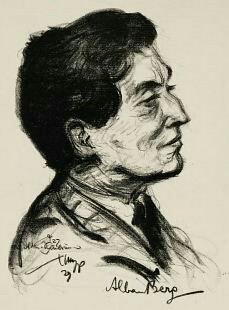
 photo: carl van vechten · public domain ↗
George Gershwin
sourcesThe New York Times — "George Gershwin, Composer, Is Dead" (July 12, 1937 obituary; contemporaneous account of the Hambitzer teacher relationship) · delanceyplace.com, excerpting Alex Ross, The Rest Is Noise · Classic FM — "George Gershwin · Wikipedia — George Gershwin (biographical orientation)
In 1910, the Gershwins bought a piano meant for the elder son, Ira, to take lessons on; it was twelve-year-old George who sat down first and played back a tune he'd memorized off a neighbor's player piano, note for note. Formal training didn't stick until he found Charles Hambitzer, the teacher who opened the classical repertoire he'd spend a career trying to marry to Tin Pan Alley song-plugging. He idolized Broadway's reigning composer, Jerome Kern, closely enough to measure his own rising fame against him. A decade later, in Vienna, he sat awestruck through a private quartet performance arranged by the modernist Alban Berg, and carried the score home on the train. Rhapsody in Blue and Porgy and Bess both followed from that same restless habit — borrowing in every direction, popular and classical alike, until the two stopped sounding like separate languages.
the sound in question
1924
Rhapsody in BlueGeorge Gershwin
walk the tributaries ↓
Charles Hambitzer1900s–10s · Classical / Light music
Biographers repeat that Gershwin called him "the first great musical influence in his life" — a line traced only to later retellings, never to his own letters or interviews. Firmer ground: Gershwin's obituary, written by The New York Times the week he died in 1937, corroborated the outline independently — Hambitzer, it noted, "gave Mr. Gershwin his first rudiments of harmony, and initiated him to the wonder of the classics." He had found a self-taught song plugger in 1913; when Hambitzer died in 1918, at what the paper called "a crucial point in the boy's studies," he left behind a musician steeped in the concert repertoire.
listen: upstream & here
1913
No known recordingCharles Hambitzer
1924
Rhapsody in BlueGeorge Gershwin
listen forNo recording of a Hambitzer composition survives to set beside his student's — the teaching is the only audible thread left. Listen instead for what it produced: Rhapsody in Blue refuses to stay a pop tune, stretching a handful of themes across a single continuous movement and drifting far from its opening key, structural ambition closer to the concert hall than to Tin Pan Alley. That reach — "the wonder of the classics" grafted onto a piece built from jazz and blues inflections — is the debt made audible.
Jerome Kern1910s–30s · Broadway / Musical theatre
Gershwin heard Jerome Kern's songs at a family wedding as a teenager and quit his job as a Remick's song plugger in 1917 chasing the kind of Broadway production music Kern was writing, soon landing the rehearsal-pianist job on Kern's own revue, Miss 1917. Six years later, already a working Broadway songwriter, he wrote to his brother Ira about landing at Southampton: an immigration officer had recognized his name off his passport, and a reporter came up asking for a few words. "I felt like I was Kern or somebody," he wrote.
listen: upstream & heresource: Library of Congress "In The Muse" blog — Janet McKinney, "Nice Work If You Can Get It ↗
1914
They Didn't Believe MeJerome Kern
1924
The Man I LoveGeorge Gershwin
listen forNo cover or shared session links these two — the pairing is stylistic, the best-documented echo in the secondary literature rather than a proven quotation. Play Kern's 1914 "They Didn't Believe Me" against Gershwin's 1924 "The Man I Love": both stretch a single 32-bar ballad across one long, arching phrase that barely repeats itself, unhurried and conversational rather than built from short, catchy hooks — the "Kern sound" a teenage Gershwin is widely said to have studied before he had one of his own.
Alban Berg1920s · Contemporary classical / Atonal / Opera
In Vienna in spring 1928, Alban Berg welcomed his American visitor by having a string quartet perform his own Lyric Suite, then handed him the score; Gershwin studied it on the train to Paris and had it played at parties for years after. Awed, he hesitated to play his own songs afterward until Berg told him plainly, "Mr. Gershwin, music is music." The critic Alex Ross, in The Rest Is Noise, traces the debt past that anecdote: the alternating half-diminished-seventh chords under Marie's lullaby in Berg's opera Wozzeck, he argues, resurface under Gershwin's own mother's-lullaby number seven years later.
listen: upstream & here
1925
Wozzeck, Op. 7: Act I, Scene 3 — Marie's Lullaby ("Eia popeia")Alban Berg
1935
SummertimeGeorge Gershwin
listen forThis pairing is Ross's ear, not Gershwin's own testimony. Cue Daniel Barenboim's recording of the ostinato under Marie's "Eia popeia" in Wozzeck's first act, then Billie Holiday's 1936 "Summertime," and listen for the same harmonic trick doing the same job in both: a repeating chord that keeps refusing to settle into a home key, unease humming underneath a lullaby meant to sound soothing.