walking upstream…
Garoto
sourcesRevista Vórtex — Lima, "Yvonne Rebello e Garoto" (Gnattali's reciprocal influence; Garoto's 1944 diary entry) · UFG master's dissertation — Matos, choro and jazz in Garoto's work (Pixinguinha's role in choro; Um a Zero recording) · Acervo Casa do Choro — Garoto biography (big-band jazz contact; Concertino premiere) · Projeto História — Estephan, "Garoto e a Era do Rádio no Brasil" (Ellington/Tatum audience; Gnattali partnership)
Asked in religion class which extraordinarily gifted man God had sent to earth, the São Paulo kid nicknamed "Moleque do Banjo" shot back: "It was Ernesto Nazareth!" Aníbal Augusto Sardinha — Garoto, "the Kid" — had his first record out at 15 and was studying classical guitar under Francisco Tárrega's method by 18. The turning point came in 1939: Carmen Miranda invited him into her backing band for an eight-month U.S. tour — Broadway, a White House show for FDR, jazz close enough that Duke Ellington and Art Tatum came to hear him play. Back in Rio, a decade at Rádio Nacional under conductor Radamés Gnattali sharpened his harmony until, in 1953, he premiered a concerto written for him at the Teatro Municipal, the guitar's first time there as soloist. He died at 39, having written the harmonic playbook bossa nova would open a few years later.
the sound in question
Jorge do FusaGaroto
walk the tributaries ↓
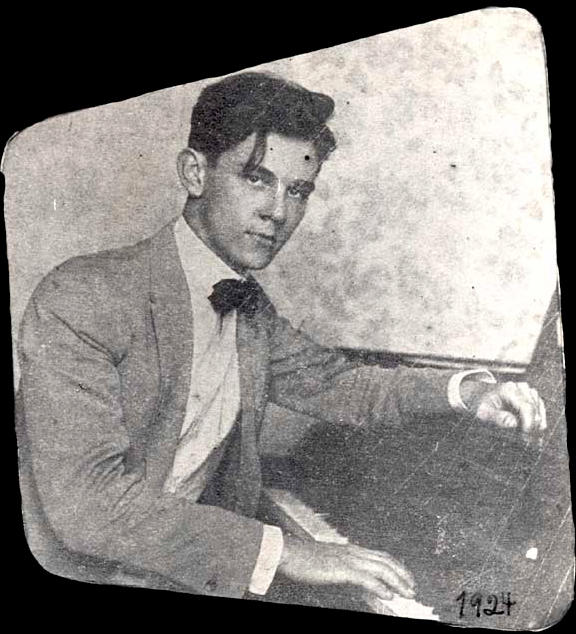
Radamés Gnattali1940s–50s · Choro / Brazilian classical music
At Rádio Nacional, where Garoto worked for a decade from 1942, a 1944 newspaper profile caught the two men mid-session — "one played, the other listened," each waiting on the other's opinion of a new composition. Garoto's own diary that December names the debt directly: "I'm going to the radio to do, at 7:10pm, my first program in guitar solos. Solo Adelita, Abismo de Rosas, and Saudade, a chôro by Radamés." Conductor and mentor, Gnattali steered him toward the guitar as a serious solo instrument, then wrote him a concerto to prove the point.
listen: upstream & here
SaudadeRadamés Gnattali
Jorge do FusaGaroto
listen forPlay Gnattali conducting the Rádio Nacional orchestra through his own "Saudade" — a 1956 broadcast recording, chord changes a shade more chromatic than typical chôro of the era — then Garoto's solo "Jorge do Fusa," where that same harmonic restlessness gets compressed onto six unaccompanied strings: a chôro's bounce dressed in chords that keep resolving somewhere unexpected. It's the sound of a guitarist who spent a decade absorbing a conductor's ear for harmony, then had to carry it alone.
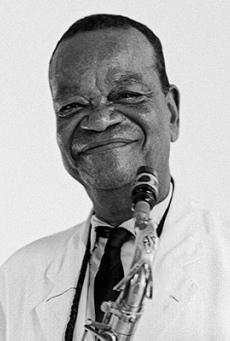
Pixinguinha1920s–30s · Choro
Garoto's generation of chorões grew up on Pixinguinha's tunes the way jazz players grew up on Armstrong's; one academic history of Garoto's choro roots credits him plainly with having "brought ideas together and gave choro a defined musical form." Garoto recorded that inheritance twice over: "Carinhoso," cut with pianist Carolina Cardoso de Menezes between 1942 and 1946, and "Um a Zero," recorded in 1949 with his own trio, Trio Surdina — direct covers of the composer whose harmonic vocabulary every choro guitarist of the period had to answer to.
listen: upstream & heresource: Enciclopédia Itaú Cultural — Garoto (biography; Gnattali mentorship; Pixinguinha cover recordings) ↗
1946
Um a ZeroPixinguinha
1949
Um a ZeroGaroto
listen forPixinguinha and flutist Benedito Lacerda's 1946 "Um a Zero" rides on flute and tenor sax trading the tune's syncopated dips; Trio Surdina's 1949 version hands that same melody to Fafá Lemos's violin over Garoto's guitar. Listen for what survives the swap — the tune's off-the-beat lean intact — and what changes: Garoto's chords underneath fill the space a horn section used to occupy, thicker and more harmonically restless than the original charts called for.
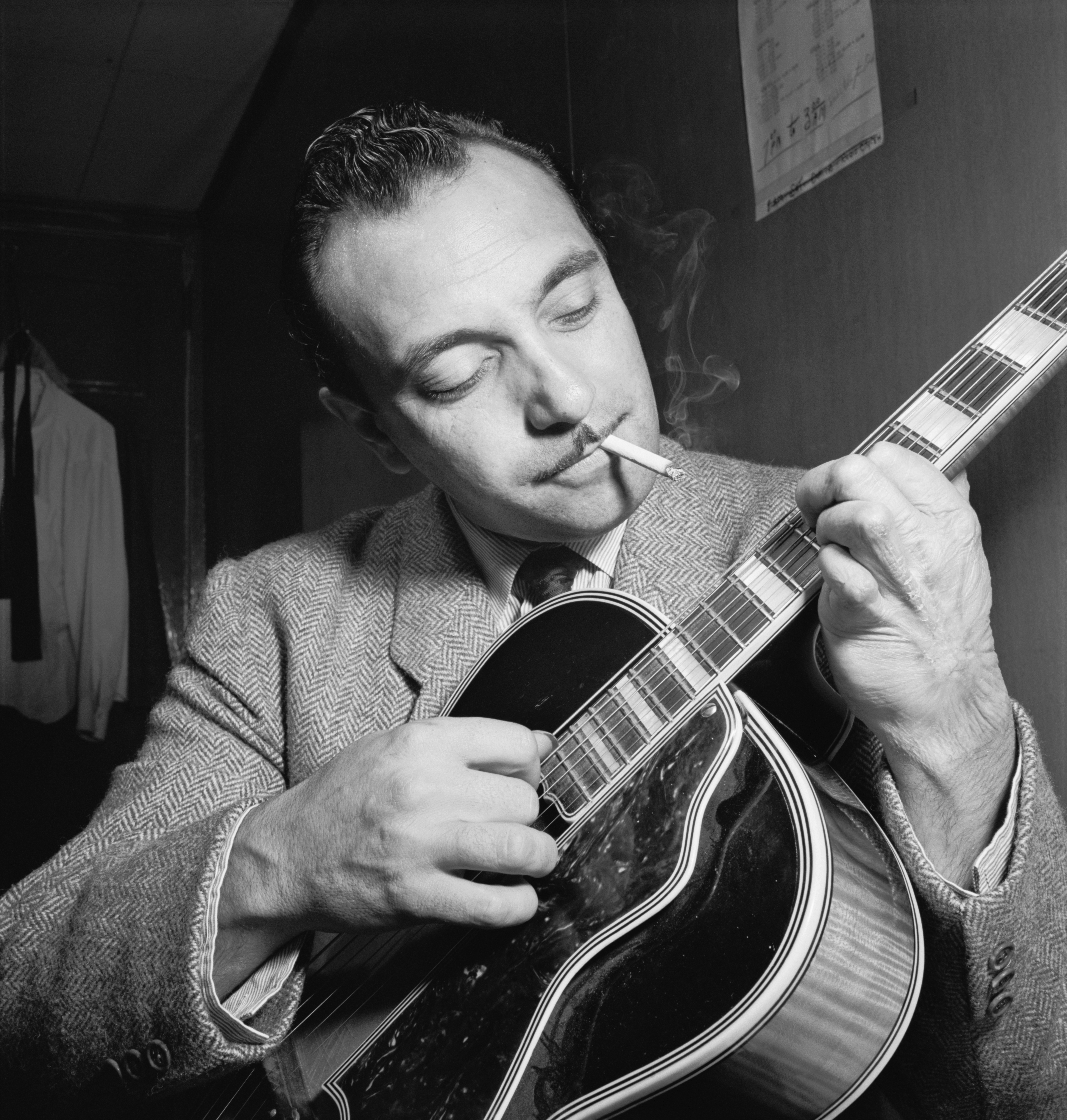
Django Reinhardt1930s · Gypsy jazz / Jazz / Swing
A 2020 profile of Jorge Mello's biography of Garoto is careful to debunk a favorite legend — that Garoto and fellow guitarist Aimoré once watched Django Reinhardt play live in Paris. They never did. But the account draws a hard line under the influence itself: "it is a fact that Garoto underwent musical influence from Reinhardt" — a debt paid entirely through records, in the extended, chromatic chords the Belgian-Romani guitarist brought to string-band jazz an ocean away.
listen: upstream & heresource: Jornal Opção — "Biografia revela o Garoto notável..." (Django Reinhardt influence; US jazz exposure; biographical anecdotes) ↗
1937
Minor SwingDjango Reinhardt
DesvairadaGaroto
listen forNo cover or session ties the two directly — just a shared vocabulary. Django's "Minor Swing" climbs a minor-key chord progression under a spry melodic line; Garoto's own "Desvairada" leans on the same instinct, voicing a chôro's melody over altered, jazz-inflected chords instead of the simple triads choro traditionally used. The kinship is in the harmonic reach, not a shared session or tune.