walking upstream…
Freddie King

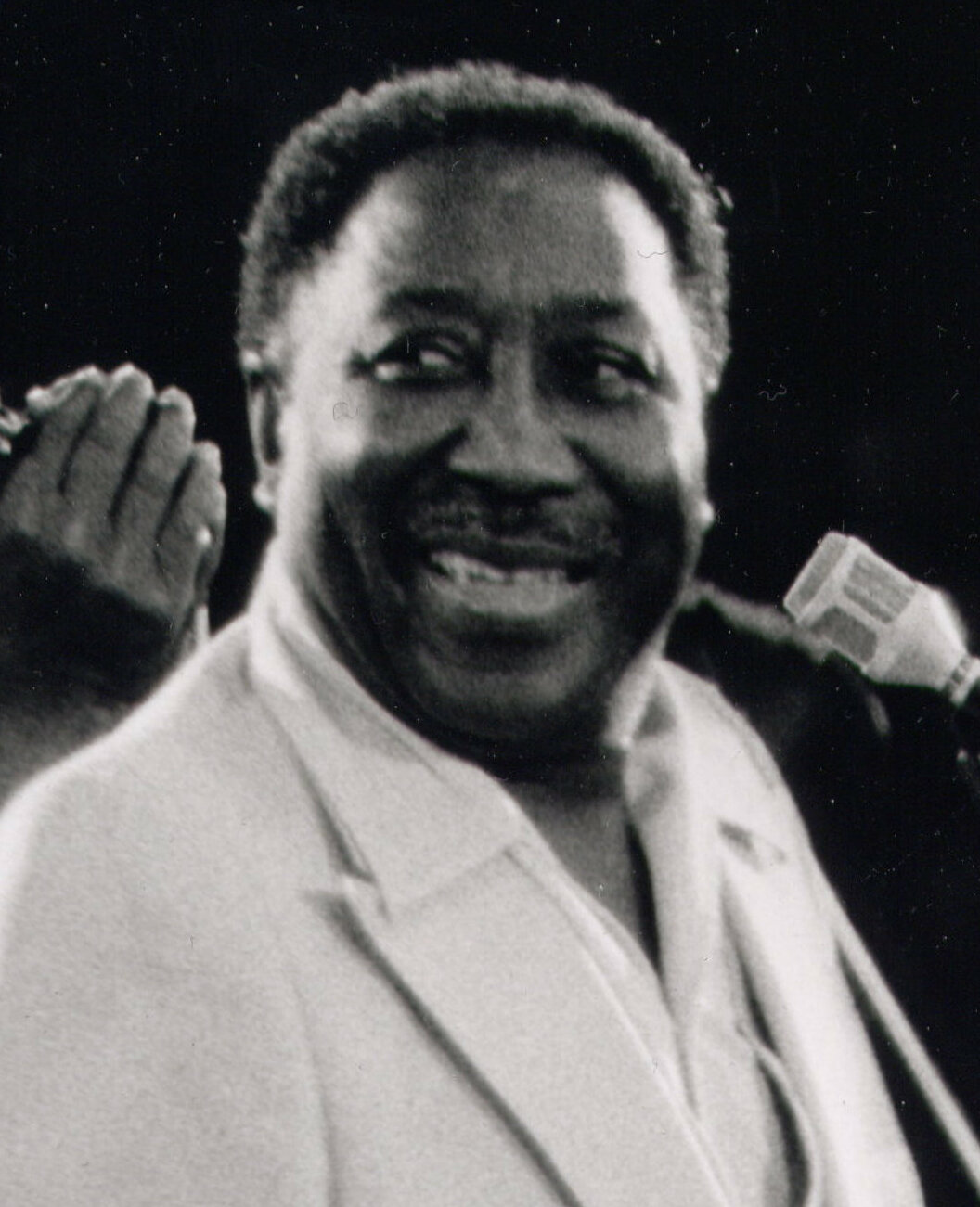

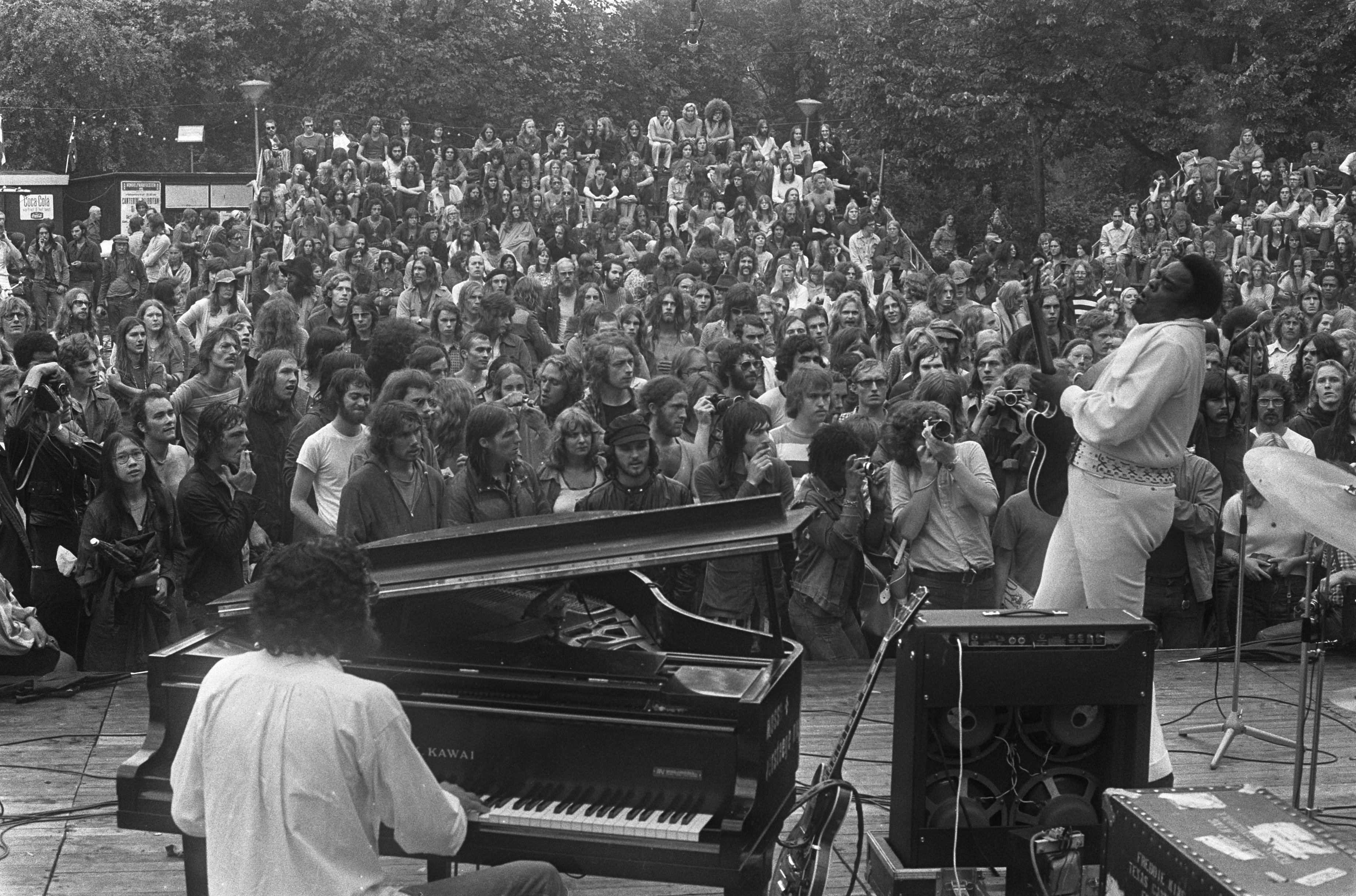 photo: bert verhoeff (anefo) · cc0 ↗
Freddie King
Born Fred Christian in Gilmer, Texas, in 1934, King learned guitar as a boy from his mother and an uncle before the family moved to Chicago's South Side around 1950. As a teenager he snuck into blues clubs to hear Muddy Waters and Howlin' Wolf, formed his own combo with Muddy sidemen Jimmy Rogers and Eddie Taylor, and fused the country-blues bite he'd brought from Texas with Chicago's amplified, thumbpicked attack. Signed to Cincinnati's Federal Records in 1960, he cut a run of instrumentals — 'Hide Away,' 'The Stumble,' 'San-Ho-Zay' — that turned the guitar solo itself into a hit single and became a Chicago-club rite of passage for a generation of British and American rock guitarists. A big, commanding man known as the 'Texas Cannonball,' he kept recording and touring relentlessly, from Federal through Atlantic to Leon Russell's Shelter label, until his death from heart failure in 1976 at just 42.
the sound in question
1961
Hide AwayFreddie King
walk the tributaries ↓
B.B. King1950s–70s · Blues / Electric blues / Rhythm and blues
Writers tracing Freddie King's development describe him taking the styles of B.B. King, T-Bone Walker, Lightnin' Hopkins, and others and welding them into his own Texas-meets-Chicago sound (the two Kings, unrelated, were friendly rivals who traded licks and respect for years). The trait that surfaces most directly is B.B.'s vocal-like string bending and wide vibrato — treating a held, bent note like a held, wailing vocal note, letting the guitar answer the singer's own phrase.
listen: upstream & here
1951
Three O'Clock BluesB.B. King
1960
Have You Ever Loved a WomanFreddie King
listen forSet B.B. King's breakthrough 'Three O'Clock Blues' beside Freddie King's slow blues 'Have You Ever Loved a Woman' — both stretch out over an unhurried 12-bar form built entirely around long, cried, heavily bent notes that mimic the pained delivery of the vocal line right next to them.
Muddy Waters1950s · Chicago blues / Electric blues / Delta blues
Soon after arriving in Chicago around 1950, the teenaged King was sneaking into South Side clubs to hear Muddy Waters's band, and he later formed his own group, the Every Hour Blues Boys, with Waters's own sidemen Jimmy Rogers and Eddie Taylor. That direct apprenticeship in the Waters camp's electrified sound is where King picked up the plastic thumbpick and metal fingerpick combination that gave Chicago blues guitar its hard, percussive snap — the technique underneath King's own famously aggressive right hand.
listen: upstream & here
1950
Louisiana BluesMuddy Waters
1961
San-Ho-ZayFreddie King
listen forCompare the driving, heavily accented shuffle of Waters's 'Louisiana Blues' with King's instrumental 'San-Ho-Zay' — both ride a hard-picked, amplifier-thickened guitar attack that pushes right up against the beat rather than floating over it.
T-Bone Walker1940s · Jump blues / Electric blues / West Coast blues
Accounts of King's formation describe him sneaking into Chicago's South Side clubs as a teenager and absorbing the sound of touring stars like T-Bone Walker alongside the local Chicago crowd — writers on King's style consistently name Walker among the artists whose vocabulary he mixed with Muddy Waters and Lightnin' Hopkins to build his own sound. What carried over is the idea of the electric guitar as a stand-alone lead voice: clean, jazz-tinged turnarounds and unhurried single-string melody built to be listened to on its own, not just strummed behind a singer.
listen: upstream & here
1947
Call It Stormy MondayT-Bone Walker
1961
The StumbleFreddie King
listen forCompare Walker's 'Call It Stormy Monday' with King's instrumental 'The Stumble' — both let a smooth, horn-like guitar line carry the whole arrangement through jazzy, non-standard chord changes, prioritizing melodic invention over raw distortion.