walking upstream…
Dido


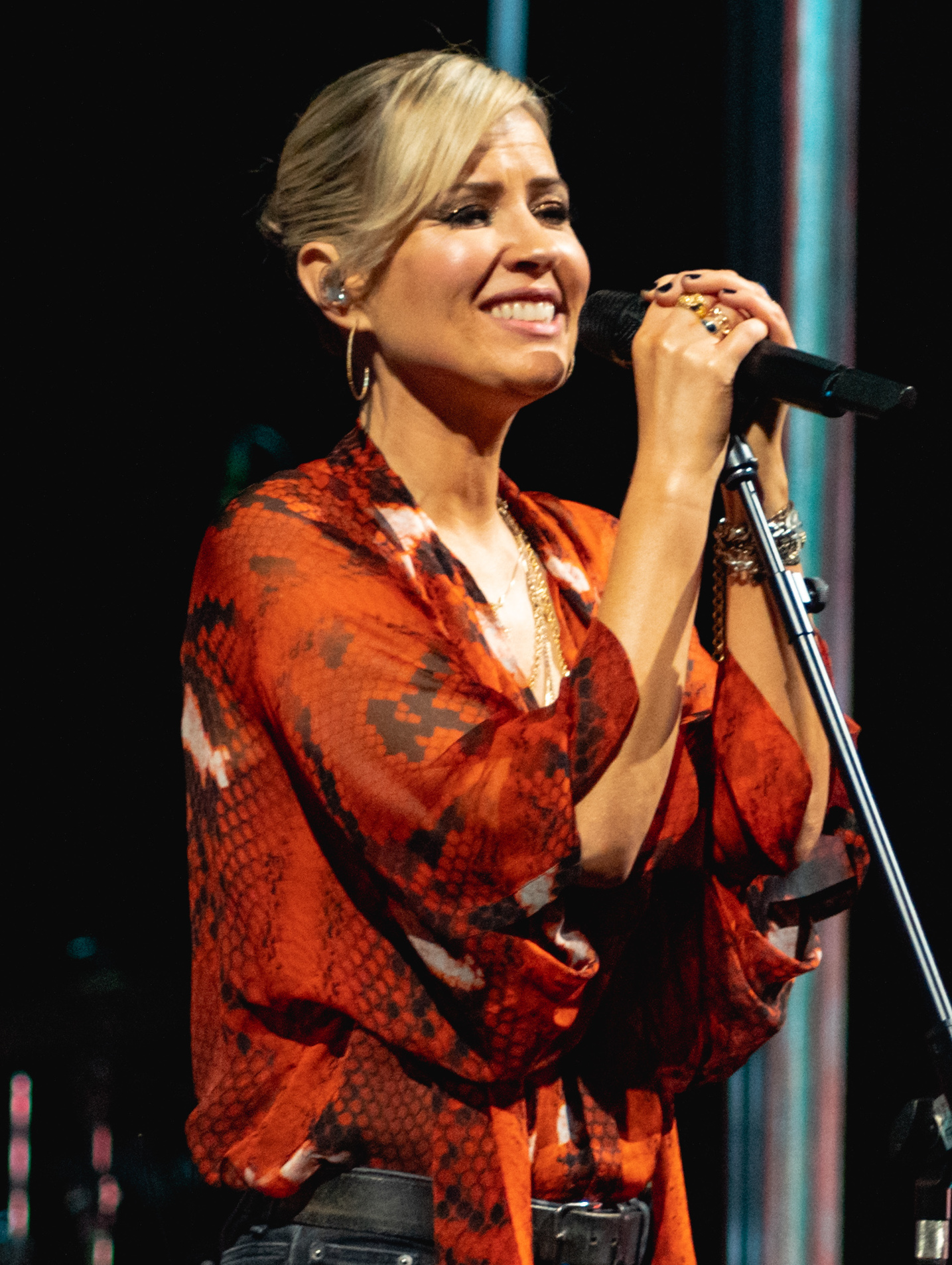
Dido (Florian Cloud de Bounevialle O'Malley Armstrong) is a British singer-songwriter, classically trained at London's Guildhall School of Music from age six, whose hushed, downtempo pop reshaped adult-alternative radio at the turn of the millennium. Her 1999 debut No Angel and its single "Thank You" — later immortalized via Eminem's sample on "Stan" — made her one of the best-selling UK artists of the 2000s, with her brother Rollo Armstrong (of the trip-hop group Faithless) co-writing and co-producing most of her catalogue.
the sound in question
2003
White FlagDido
walk the tributaries ↓
Sinéad O'Connor1990s · Alternative rock / Pop rock / Folk rock
Dido has said that as a teenager, once she moved past her classical training in 1986, she began exploring her brother Rollo's eclectic record collection and buying singles herself by the likes of "Kate Bush, Sinead O'Connor, Duran Duran and The Chieftains" — putting O'Connor's raw, unadorned singing directly in the mix of records that shaped her ear during the years she was deciding to become a singer.
listen: upstream & heresource: Record Collector Magazine, "Dido ↗
1990
Nothing Compares 2 USinéad O'Connor
2003
See the SunDido
listen forListen for the way O'Connor lets a lyric land completely unguarded, with almost no vocal ornamentation standing between the words and the feeling — the same bare, close-mic'd directness Dido leans on in her most stripped-down verses, just traded for a whisper instead of a wail.
Kate Bush1980s · Art pop / Progressive pop / Alternative rock
Bush is named in the same account of Dido's teenage record-buying habits — one of the singles she personally invested in as she was shaping her taste, alongside Sinéad O'Connor, Duran Duran and The Chieftains — placing Bush's art-pop theatricality among the direct influences on the artist Dido became.
listen: upstream & heresource: Record Collector Magazine, "Dido ↗
1978
Wuthering HeightsKate Bush
2003
Life for RentDido
listen forListen for the way both singers use a hushed, high, breathy register and atmospheric production to make a fairly plain melody feel eerie or intimate — Bush's more overtly theatrical, Dido's dialed down into something closer to a whisper over a drum loop.
Ella Fitzgerald1950s · Jazz / Vocal Jazz / Swing
Fitzgerald was among the records Dido discovered digging through her brother Rollo's collection as a teenager — described in one profile as spanning "Ella Fitzgerald, The Clash, Gregory Isaacs, Chet Baker, Sting, Boy George and Spandau Ballet." It's a generic but real point of contact: a jazz vocalist's controlled, unhurried phrasing sitting alongside the electronic and pop records that would define Dido's own sound.
listen: upstream & heresource: Record Collector Magazine, "Dido ↗
1938
A-Tisket, A-TasketElla Fitzgerald
1999
Here with MeDido
listen forListen for the unhurried sense of time and clean, controlled dynamics underneath Dido's cool delivery — less scat and swing than Fitzgerald, but the same instinct to let a phrase breathe rather than rushing to the next line.