walking upstream…
Cissy Houston


sourcesNPR Fresh Air — Remembering gospel singer and backup vocalist Cissy Houston (1998 interview naming her secular influences) · The Guardian — Cissy Houston obituary (career overview, Sweet Inspirations, Grammys) · Deadline — Cissy Houston Dies (birth details, Drinkard Four) · Soulful Kinda Music — Cissy Houston discography (single titles, years, cover attributions) · Wikipedia
In 1938, five-year-old Emily Drinkard needed a stool to be seen over the microphone in her family's gospel quartet. "I was 5 years old, and they had to put me on a stool in order to see me," she recalled decades later, "and at 5 years old, I wanted to be out playing with everyone else... I didn't have a choice." The reluctant recruit became Cissy Houston: the contralto anchoring the Drinkard Singers, then the Sweet Inspirations, the backing quartet behind Aretha Franklin's "Ain't No Way" and a decade of Elvis Presley's live shows. She went solo in 1970, cut the first recorded version of "Midnight Train to Georgia," and won two gospel Grammys while directing the choir at Newark's New Hope Baptist Church for over fifty years. Her most enduring credit may be training her daughter Whitney in that same choir loft, gospel discipline passed hand to hand.
the sound in question
1978
Think It OverCissy Houston
walk the tributaries ↓
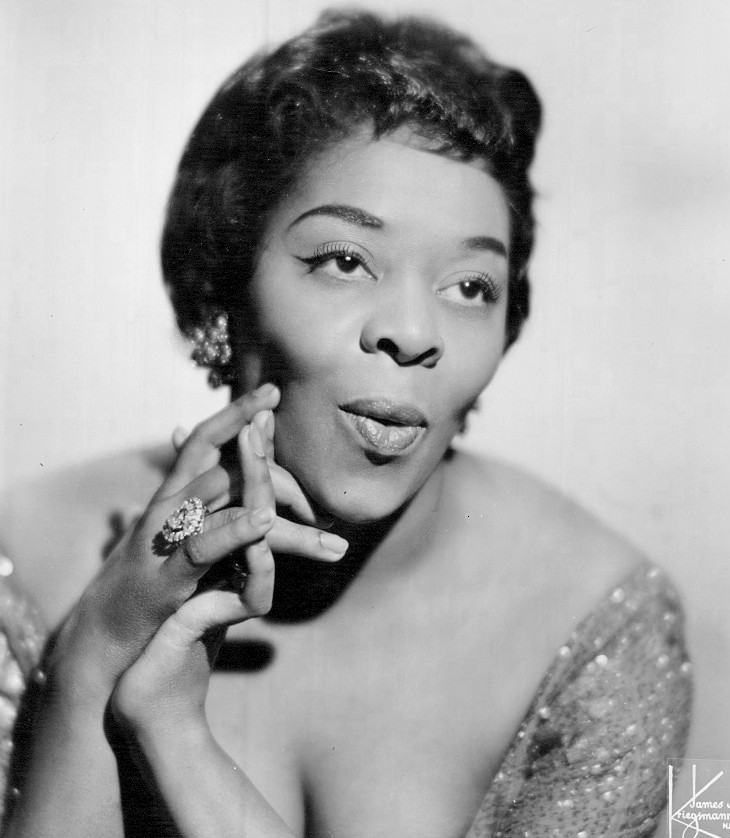
Dinah Washington1950s · Jazz / Blues / R&B / Traditional pop
Asked by NPR's Terry Gross in 1998 how she'd first heard secular music growing up in her family's gospel quartet, Cissy Houston didn't equivocate. "Well, Dinah Washington was one of my favorite people, and I love her. Today, I love her." The doubled present tense is the tell: forty years on, the singer still measured her own instrument against Washington's, the jazz-schooled contralto who'd already spent a decade turning gospel phrasing into secular heartbreak by the time a teenage Cissy was old enough to hear her on the radio.
listen: upstream & here
1960
This Bitter EarthDinah Washington
1972
Didn't WeCissy Houston
listen forWashington's 1960 hit rides a spare string bed, holding most of the vocal in a low, conversational murmur before cracking open on the title line — the dynamic leap is the whole performance. Houston's own "Didn't We," cut a decade later, follows the same shape: verses held close to a whisper, then a chest-voice surge on the chorus that trades Washington's cool control for outright ache. Listen for where each singer chooses to hold back before letting go.
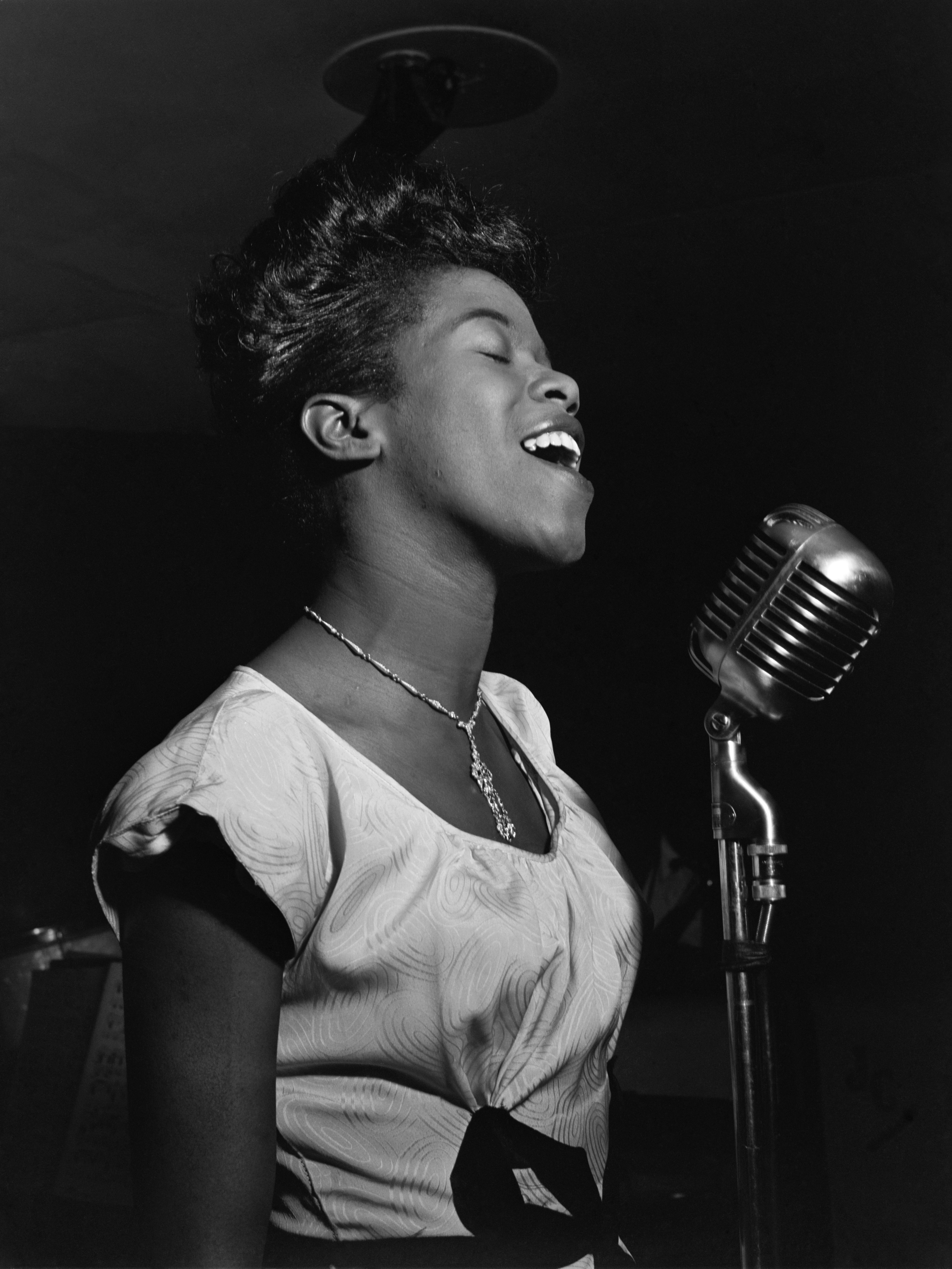
Sarah Vaughan1950s–60s · Jazz / Vocal Jazz / Bebop
Sarah Vaughan wasn't just a record to Cissy Houston, she was practically neighborhood family. "Sarah Vaughan went to school with my sister, so she lived in the neighborhood also," Houston told Gross in the same 1998 interview. "I listened to her and Jimmy Witherspoon." Where Dinah Washington was an idol at a remove, Vaughan was proof a Newark girl from church could sing anything: a bebop-schooled instrument moving from a low, foghorn note to a floated high one without a seam, the model Houston chased as she pushed her own natural range upward.
listen: upstream & here
1954
Lullaby of BirdlandSarah Vaughan
1975
He / I BelieveCissy Houston
listen forVaughan's 1954 recording for EmArcy, cut with Clifford Brown's trumpet threaded through the arrangement, turns range into pure theater: she opens the verse in a low, near-spoken murmur, then floats the title phrase up into a light, disembodied top note, crossing two octaves without visibly working for it. Houston's 1975 gospel-pop medley "He / I Believe" makes the identical climb, a hushed, chesty verse lifting into a bright, church-trained peak by the second half. "I always wanted to sing high," Houston said of chasing that range, "so, to develop it, I did scales and kept going up and up." Listen for the same unhurried octave jump.
B.B. King1950s–70s · Blues / Electric blues / Rhythm and blues
By the close of the same answer, Houston's list had moved from her vocal idols to the music itself. "I listened to her and Jimmy Witherspoon" — the blues singer named in the same breath — "I loved him - B.B. King, you know, people like that. The blues - I love the blues, things like that." Blues, not gospel or pop, is the third love she names: the King catalogue she was absorbing as a Newark teenager in the late 1940s, years before she cut a secular note of her own, and the source of a plain, unhurried declarative phrasing she'd later carry into disco and pop hooks alike.
listen: upstream & here
1969
The Thrill Is GoneB.B. King
1979
Warning-Danger (This Love Affair May Be Hazardous To You)Cissy Houston
listen forKing's 1969 signature turns a minor-key blues into something close to noir: a slow, aching guitar answering a vocal that never rushes, riding the beat instead of chasing it. Houston's 1979 disco single "Warning-Danger" keeps that same unhurried menace inside a much faster tempo — her vocal sits behind the beat, drawling out the warning while the bassline races ahead of her. Listen for the same reluctance to hurry, blues phrasing surviving the move from blues bar to disco floor.