walking upstream…
Chaka Khan


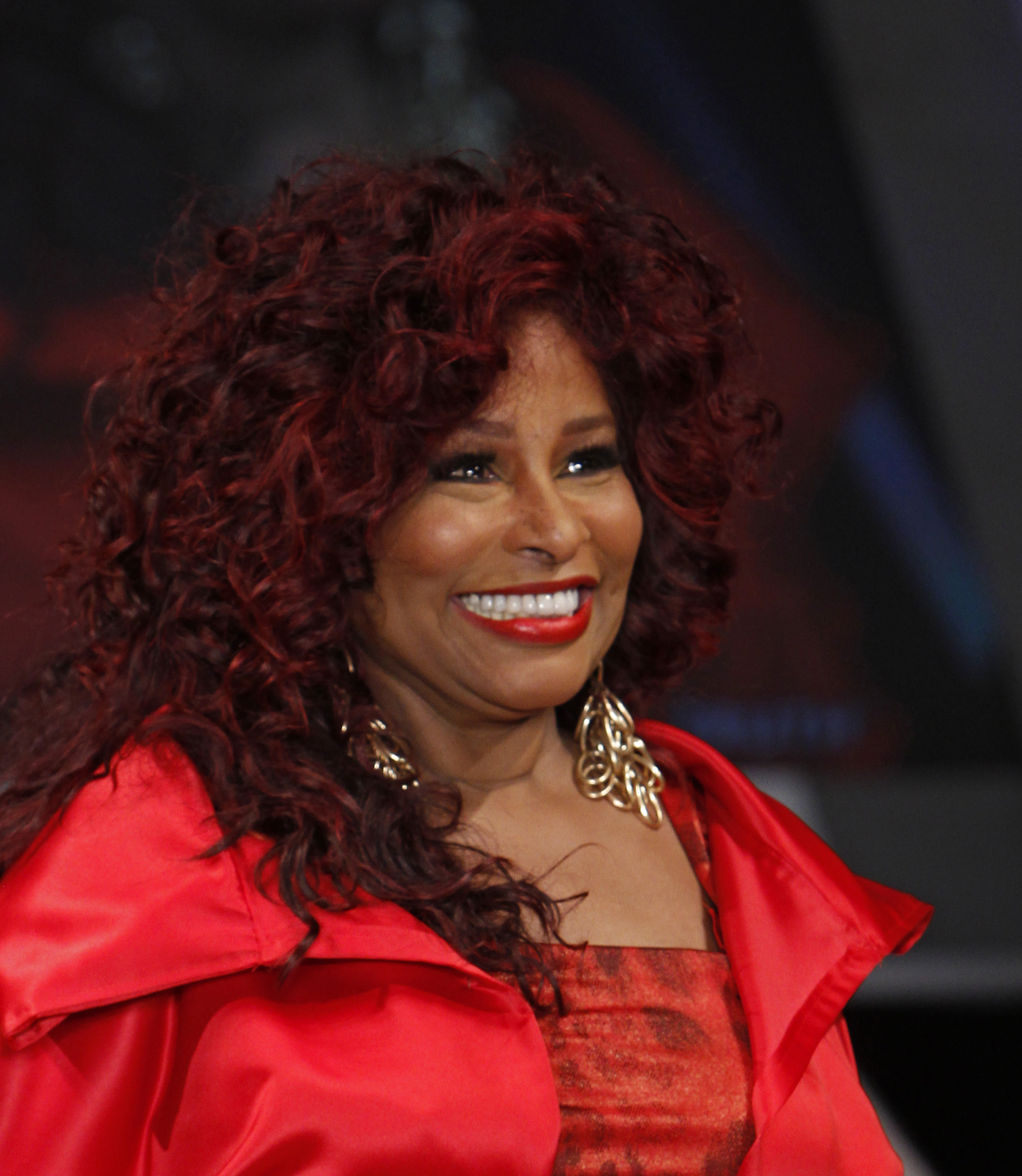 photo: the heart truth · public domain ↗
Chaka Khan
sourcesThe Gentlewoman — Chaka Khan (family background, Miles Davis collaboration and quote) · PopMatters — Journey to the Core of Chaka Khan · Performing Songwriter — The Musical Force of Chaka Khan (Miles Davis and Billie Holiday testimony) · jonimitchell.com library reprint of The Washington Post Express — Chaka Khan on her Joni Mitchell tribute album (Joni Mitchell testimony) · uDiscoverMusic — Joni Mitchell Tribute Album To Feature James Taylor, Norah Jones, Chaka Khan And More (Help Me cover, Joni 75) · funknstuff.net — Chaka Khan
On Saturday mornings in the family's Hyde Park apartment on Chicago's South Side, cleaning house meant singing together: "We'd all sing together in my house on Saturday mornings when we were cleaning up. It was not that novel a thing for us as a family. We're very driven by music," Chaka Khan remembers. Born Yvette Stevens in 1953 to a jazz-collecting father and a University of Chicago researcher mother, she took a Yoruba name at 13, dropped out of high school, and by 1972 was fronting the Chicago funk band Rufus, powering 1974's "Tell Me Something Good." She went solo in 1978 with "I'm Every Woman," stacked hits through the 1980s, and kept circling back, on records like 1982's jazz-standards set Echoes of an Era, to the music her father played on Saturdays.
the sound in question
1978
I'm Every WomanChaka Khan
walk the tributaries ↓
Joni Mitchell1970s · Folk / Folk rock / Jazz
Khan has called Joni Mitchell "my No. 1 artist and songwriter" since her teens, and made good on it in November 2018: at a Dorothy Chandler Pavilion concert marking Mitchell's 75th birthday, she sang "Help Me," backed by Rufus Wainwright and Seal, later released on Joni 75: A Birthday Celebration. "That woman ... let me tell you, there is no one like her on the planet," Khan told PopMatters in 2007. "She's the best. I want to be like her when I grow up." She has since vowed to cover a Mitchell song on every album she makes, "just to educate the kids."
listen: upstream & heresource: Loud And Quiet — Chaka Khan ↗
1974
Help MeJoni Mitchell
2019
Help MeChaka Khan
listen forMitchell's 1974 original rides a nervous, tumbling energy — her phrasing runs just ahead of Tom Scott's L.A. Express horns, like someone talking faster than they can think through the panic in the lyric. Khan's 2019 tribute-concert version slows the same tune into a testimony: she holds notes Mitchell rushed past and lets Wainwright and Seal's harmonies build behind her rather than chase her, turning a song about romantic panic into something closer to a soul sermon. Melody and words are identical; the pacing is entirely Khan's own.
Miles Davis1950s–70s · Jazz / Modal jazz / Jazz fusion
Khan visualizes her own voice as an instrument, not a throat: "Horn players will do that for me — Miles Davis, of course... I kind of visualize my voice as a saxophone," she told Performing Songwriter. The admiration became mutual and then literal — Davis played trumpet on "Sticky Wicked," a Prince-written, Prince-produced track on Khan's 1988 album C.K. "Working with him was a highlight of my life," she said. "My dad listened to him when I was growing up, so for my dad to hear me with Miles... was truly a blessing." Davis, for his part, told her simply: "You sing like my horn."
listen: upstream & heresource: Loud And Quiet — Chaka Khan ↗
1959
Blue in GreenMiles Davis
1988
Sticky WickedChaka Khan
listen for"Blue in Green" is Davis at his most spare — long, breath-shaped phrases with silence doing as much work as notes, a trumpet that sounds like it's thinking out loud. On "Sticky Wicked," that same unhurried horn threads through Prince's loose, off-kilter funk groove while Khan half-sings, half-raps overtop — two players trading the lead rather than one accompanying the other. Listen for how closely her phrasing sits behind Davis's horn, holding back exactly where he does.
Billie Holiday1930s–40s · Jazz / Vocal jazz
Khan's grandmother Maude played Billie Holiday records that stopped her granddaughter cold as a child. "I remember the first time I ever heard her I was listening to an album of hers with my grandmother... She got so much emotion across just by the way she would add those little nuances," Khan told Performing Songwriter — a lesson, she said, in "how to get an emotion across" with a song. Decades later she framed the debt as kinship: "I feel that way about Billie Holiday. I know her in an intimate way... I understand, too, because I've been where she is."
listen: upstream & heresource: GRAMMY.com — Living Legends ↗
1939
Them There EyesBillie Holiday
1982
Them There EyesChaka Khan
listen forHoliday's 1939 "Them There Eyes" hangs deliberately behind the beat, clipping some syllables short and stretching others, turning a novelty lyric into something wry and world-weary. Khan's 1982 version, cut with jazz players Chick Corea and Freddie Hubbard for her standards album Echoes of an Era, keeps that same behind-the-beat pull but pushes it toward virtuosity — where Holiday underplays a phrase, Khan bends and extends it, showing the technique Holiday spent a career hiding.