walking upstream…
Cesária Évora

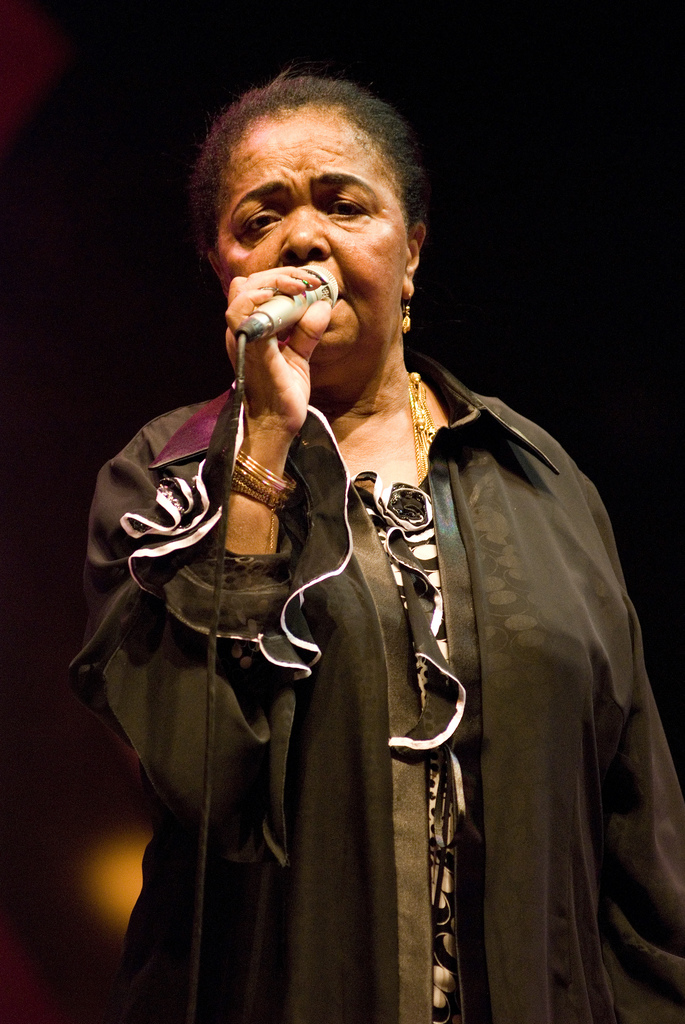
Cesária Évora sang morna and coladeira in Cape Verdean Creole for three decades in the bars of Mindelo before a 1988 Paris session and the 1992 album Miss Perfumado turned her, in her fifties, into the "Barefoot Diva" of world music. Her plain-spoken, unhurried delivery — she performed without shoes and without pretense — carried the genre's core subject, sodade (a homesick, unresolved longing tied to Cape Verde's history of drought and emigration), to audiences who had never heard of the islands.
the sound in question
1992
SodadeCesária Évora
walk the tributaries ↓
B.Léza1930s–1950s · Morna / Coladeira
Her uncle and, by Wikipedia's account, a songwriter whose compositions she "performed many of" throughout her career — four of the eleven tracks on her breakout 1992 album Miss Perfumado (the title song, "Bia," "Morabeza," and "Lua Nha Testemunha") are his. He's also credited with revolutionizing morna's harmony in the 1930s–40s with what Cape Verdean musicians call the meio-tom brasileiro, the "Brazilian half-step" — passing chords borrowed from the Brazilian and Argentine guitar styles he picked up from sailors at Mindelo's port as a young man.
listen: upstream & heresource: Wikipedia — Miss Perfumado (1992 album; B.Léza writing credits on tracks 2, 7, 9, 11) ↗
Miss PerfumadoB.Léza
1992
Miss PerfumadoCesária Évora
listen forThe chord that slides a half-step outside where a plain morna cadence would resolve, giving the melody an extra beat of ache before it settles — that gliding harmonic sophistication is B.Léza's fingerprint underneath Évora's plain, unhurried phrasing.
Armando Zeferino Soares1950s · Morna
A São Nicolau salesman with no other known composition to his name, Soares wrote "Sodade" in the 1950s as a farewell song for friends embarking for São Tomé e Príncipe — and spent the rest of his life fighting rival claimants over authorship, a dispute Cape Verdean courts didn't settle in his favor until December 2006, four months before he died. Évora's 1992 recording, arranged by Paulino Vieira for Miss Perfumado, is what carried his one song around the world and made it morna's best-known anthem of longing.
listen: upstream & heresource: Wikipedia — Sodade (song); Armando Zeferino Soares authorship dispute and 2006 court ruling ↗
1954
SodadeArmando Zeferino Soares
1992
SodadeCesária Évora
listen forThe way the melody keeps circling back under the word "sodade" itself without ever fully landing on the tonic — an unresolved, homesick shape built into Soares's original tune, not something Évora added.
Eugénio Tavares1900s–1920s · Morna
A self-taught poet from Brava, Tavares is credited with giving morna its enduring romantic grammar around the turn of the 20th century — sea, parting, and homesickness rendered in lyrical Creole verse, collected in the posthumous songbook Mornas: Cantigas Crioulas (1932). Cape Verdean cultural sources describe Évora among the later generations of singers who performed his mornas, but this record could not confirm a specific Tavares composition in her recorded catalog, so treat this as the template-level influence it's sourced as, not a traced song-to-song echo (flagged: no descendant track verified).
listen: upstream & here
Morna de AguadaEugénio Tavares
listen forThe basic morna shape itself — slow tempo, minor-key sway, a lyric fixed on the sea and on people who left across it — that structural and emotional template predates any individual singer, Évora included.