walking upstream…
Bootsy Collins
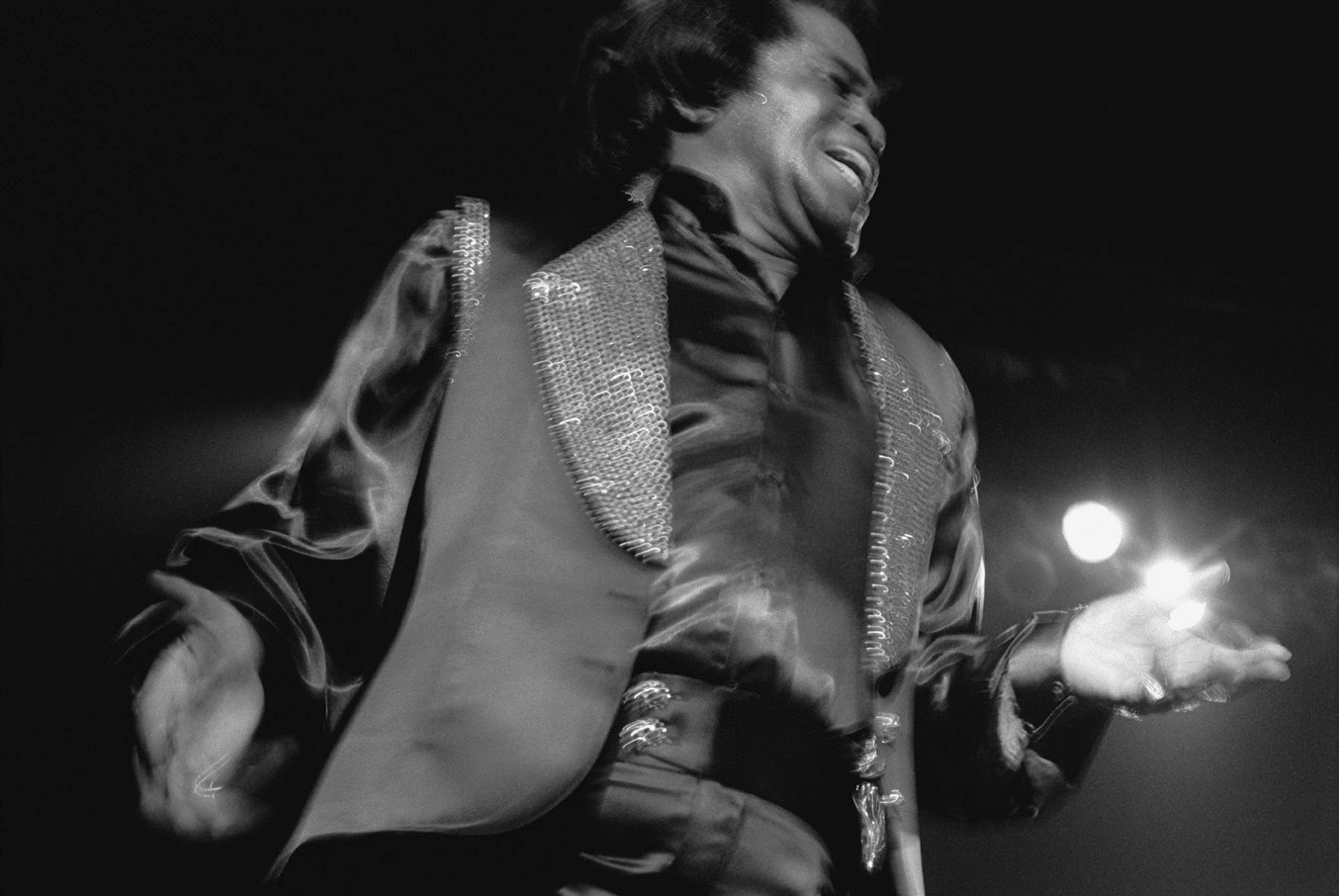

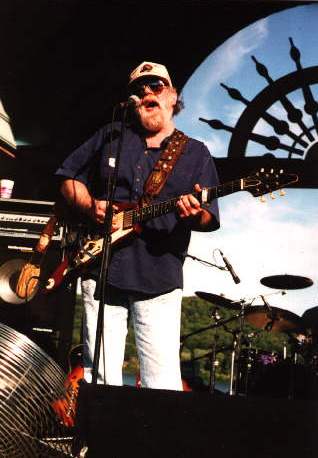
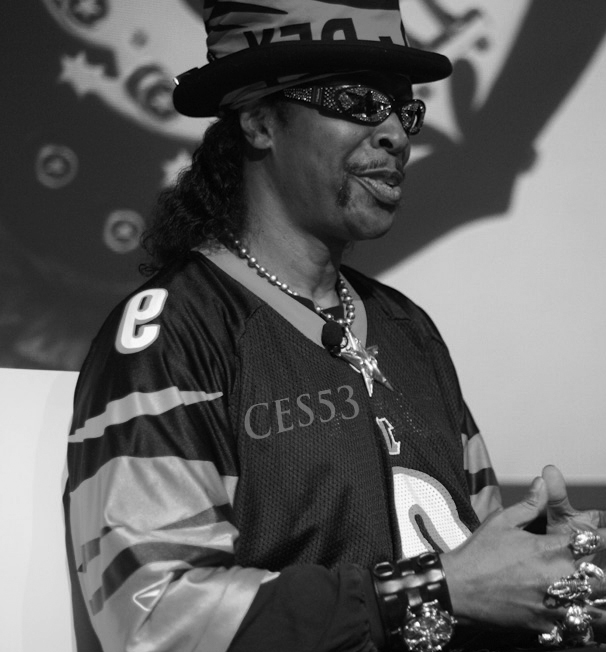 photo: juanbobadilla · public domain ↗
Bootsy Collins
sourcesRolling Stone — Bootsy Collins on James Brown, George Clinton and drugs (the James Brown lesson) · The Guardian — 'LSD was a big part of why I left James Brown's band' (leaving Brown's band) · Red Bull Music Academy — Bootsy Collins lecture (James Brown, Jimi Hendrix, and Lonnie Mack) · Official Jimi Hendrix site — Power of Soul
William "Bootsy" Collins was seventeen and still playing bass like a frustrated guitarist when, in March 1970, most of James Brown's road band walked out over pay and a Learjet was sent to fly his teenage Cincinnati group in as replacements. Eleven months backing Brown — playing on "Sex Machine" and "Super Bad" — reset his entire relationship to rhythm, until an LSD-fueled meltdown onstage got him thrown off the tour. He surfaced in George Clinton's Funkadelic, then built his own outlet, Bootsy's Rubber Band, turning deep funk into cartoon myth: star-shaped bass, mirrored top hat, and "Bootzilla" as ringmaster. He was inducted into the Rock and Roll Hall of Fame with Parliament-Funkadelic in 1997. Underneath the costume, Collins never stopped naming his teachers — a country-instrumental guitarist, a soul dictator, and a guitar player he still calls God.
the sound in question
1977
Ahh... The Name Is Bootsy, Baby!Bootsy Collins
walk the tributaries ↓
James Brown1960s–70s · Funk / Soul / Rhythm and blues
Collins arrived in Brown's band at nineteen, still stacking guitar runs onto every bassline. Brown pulled him aside, Collins told Guitar World: "Son, just slow down and give me the one. I love all these things you're doing, you're a great bass player, but if you give me that one you can do anything, and everything you want to do." What followed was nightly boot camp — Brown calling the band back after each show to insist, in Collins's telling, that he hadn't given him the one — until subordinating every fill to that single downbeat became instinct, a discipline he says he carried into every band since.
listen: upstream & heresource: Guitar World — "James Brown said, 'Son, just slow down and give me the one'" (the James Brown lesson) ↗
1967
Cold SweatJames Brown
1976
I'd Rather Be with YouBootsy Collins
listen forBrown's lesson to Collins was "the one": build everything around the crucial downbeat and let that anchor carry the song. "Cold Sweat," cut in 1967 before Collins joined the band — and, by his own account, one of the songs Brown called out the terrifying night he made his live debut with the group — strips down to exactly that: one emphatic hit on beat one, then space, the arrangement holding rather than filling. Bootsy's own "I'd Rather Be with You" keeps that same discipline: a steady, unhurried anchor note under a loose, conversational vocal, the lesson still audible years after the band that taught it.
Jimi Hendrix1960s · Rock / Blues rock / Psychedelic rock
Long before Funkadelic, Collins kept a Jimi Hendrix picture over his bed and a black light burning under it, listening on repeat with brother Catfish — the only other music allowed on James Brown's tour bus. "For me, as a young black man, Jimi Hendrix was like God," he told the Red Bull Music Academy; "in fact, he still is," he told the Guardian. The devotion outlasted Hendrix: his family later asked Collins to voice him on the DVD packaged with the box set West Coast Seattle Boy, and when the Hendrix estate sanctioned a 2004 tribute album, Collins cut his own version of the title track, "Power of Soul."
listen: upstream & heresource: The Guardian — 'The freak show never ended' (James Brown, Jimi Hendrix, and Lonnie Mack) ↗
1970
Power of SoulJimi Hendrix
listen forHendrix's 1969 studio recording of "Power of Soul" layers thick, effects-warped guitar answering his own voice, turning a soul-blues lament into something closer to a séance. Collins's 2004 cover, cut for the same Hendrix-family-sanctioned tribute album, keeps the song's chords and melody but recasts the lead voice as his own — bass and vocal standing in for the guitar Collins spent his teens worshipping through a bedroom wall. It is the tribute made literal: the fan who kept the picture over his bed now sings the song back.
Lonnie Mack1960s · Rock and roll / Blues rock / Instrumental rock
Before Brown, before Hendrix, there was Lonnie Mack. Collins and Catfish grew up on the Indiana guitarist's mostly instrumental singles, the kind of record Collins says was still common on pop radio when they were teenagers. "There was no singing, just him playing guitar, and the style of guitar he played, I just loved it," Collins recalled to the Red Bull Music Academy. It was Mack, he told the Guardian, who planted the whole ambition of his teenage band: "It's from him that we got the idea of bands wanting to be up front. Forget the singer! We wanted to be the stars."
listen: upstream & heresource: The Guardian — 'The freak show never ended' (James Brown, Jimi Hendrix, and Lonnie Mack) ↗
1963
MemphisLonnie Mack
1976
Stretchin' Out (In a Rubber Band)Bootsy Collins
listen forMack's 1963 hit "Memphis" is a pure instrumental — no vocalist at all, the guitar carrying the melody and the star power a singer would normally own, exactly the "forget the singer" format young Collins fell for. "Stretchin' Out (In a Rubber Band)," the title track announcing Collins as a bandleader in his own right, keeps his signature bass mixed forward and loud enough to function as the record's lead voice — the instrumentalist as the show's real star, the ambition Collins credits to Mack, carried from Indiana rock and roll into Cincinnati funk.