walking upstream…
Bing Crosby

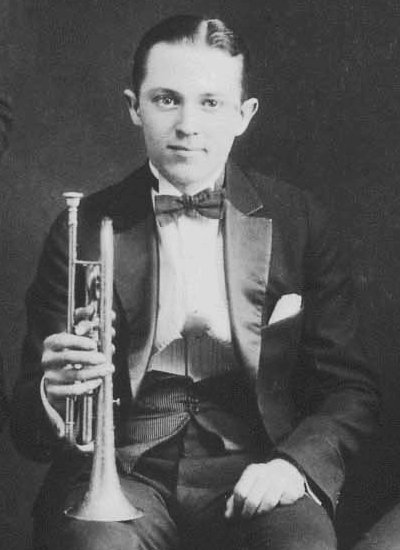


In 1917, a teenage props boy at Spokane's Auditorium theater watched Al Jolson tear through a show and never got over it — Bing Crosby spent years afterward singing like him, belting the vaudeville high notes. Hired by bandleader Paul Whiteman's orchestra in 1926, he roomed with cornetist Bix Beiderbecke and, at singer Mildred Bailey's urging, caught Louis Armstrong at Chicago's Sunset Café; both men reshaped him. On the 1928 Whiteman record "You Took Advantage of Me," Crosby's vocal follows a blazing Beiderbecke-Trumbauer duet so naturally that Beiderbecke's biographer Richard Sudhalter wrote he "catches the mood exactly, voice brimming with obvious pleasure." Going solo in 1931, Crosby dropped the belting for something new: an intimate, microphone-close croon. He became the best-selling recording artist in history, all by learning, one borrowed voice at a time, what not to sound like.
the sound in question
1942
White ChristmasBing Crosby
walk the tributaries ↓
Louis Armstrong1920s–30s · Jazz
Crosby named exactly one artist as his greatest influence, unprompted, when asked twenty-four years after they met: "I am proud to acknowledge my debt to the Reverend Satchel Mouth," he said of Louis Armstrong. "He is the beginning and the end of music in America. And long may he reign." The debt started in 1926, when singer Mildred Bailey pushed the twenty-three-year-old Crosby to catch Armstrong at Chicago's Sunset Café; within two years, singing with Paul Whiteman's orchestra, Crosby was folding scat breaks — the wordless, rhythmic vocal jazz Armstrong had just introduced on "Heebie Jeebies" — into his own records.
listen: upstream & heresource: uDiscover Music — "'Havin' Fun' ↗
1926
Heebie JeebiesLouis Armstrong
1928
Wa-Da-Da (Ev'rybody's Doin' It Now)Bing Crosby
listen forArmstrong's 1926 Hot Five session gave American pop its first scat chorus — nonsense syllables riding the beat where words would normally sit. Two years later, on "Wa-Da-Da," Crosby and the Rhythm Boys open with the same trick, syllables standing in for melody, though Crosby's voice stays lighter and more clipped than Armstrong's growl. Armstrong noticed the transformation and said so: "Bing's voice has a mellow quality that only Bing's got," he told Time magazine in 1955. "It's like gold being poured out of a cup." Listen for that same unhurried phrasing, borrowed rhythm turned into something smoother.
Bix Beiderbecke1920s · Jazz
Of the musicians Crosby named as his biggest influences — Jolson, Armstrong, and Bix Beiderbecke — he was closest, personally, to Beiderbecke, his roommate on the road with Paul Whiteman's orchestra. Crosby memorized Bix's cornet solos and scatted the phrases back at him, night after night, sober or not. Clarinetist Mezz Mezzrow remembered a 1926 Chicago jam session under Beiderbecke's spell: "[Bing] beat time all night with his hands, like he was at a Holy Rollers meeting. Under Bix's spell, everybody was a genius that night." Beiderbecke also steered Crosby toward Debussy and Stravinsky, a taste for restraint that would surface, years later, in how carefully Crosby phrased a ballad.
listen: upstream & here
1927
Singin' the BluesBix Beiderbecke
1931
I Surrender, DearBing Crosby
listen forBeiderbecke's cornet solo on "Singin' the Blues" set the template critic Larry Kart says Crosby's own style would soon follow: "a romantic sound — gentle, intimate, and tinged with nostalgia." Listen for the way Bix holds notes back, understating the phrase rather than pushing it, letting silence do part of the work. On "I Surrender, Dear," Crosby's vocal does the same thing with words — unhurried, close to the microphone, never straining for a note when he can lean into it instead. The cornet's restraint becomes the singer's.
Al Jolson1920s–30s · Vaudeville / Popular
Crosby's first model was Al Jolson, whom he watched perform live in Spokane as a teenager before chasing the same booming, belted delivery himself. Years later, singing the Rhythm Boys' main vocal chorus on "From Monday On" (1928) with Paul Whiteman's orchestra, traces of that imitation still surfaced, even as Crosby was already, by his own account, moving past it. "I felt my style then was a cross between Al Jolson and a musical instrument," he recalled. "I was now being influenced by these musicians."
listen: upstream & here
1921
April ShowersAl Jolson
1928
From Monday OnBing Crosby
listen forJolson's "April Showers" is unamplified vaudeville belting, pitched to reach the back row without a microphone's help. On "From Monday On," recorded the same year Crosby began edging away from that model, biographer Gary Giddins pinpoints exactly where the old habit still clings: Crosby "tags a couple of words — skies, on — with Jolsonesque vibrato, though he lightened up on the later takes." Everywhere else on the record he's already singing smaller, closer, more conversational — the sound Jolson's stagecraft never needed and the microphone would soon make Crosby's whole career.