walking upstream…
Billy Wright
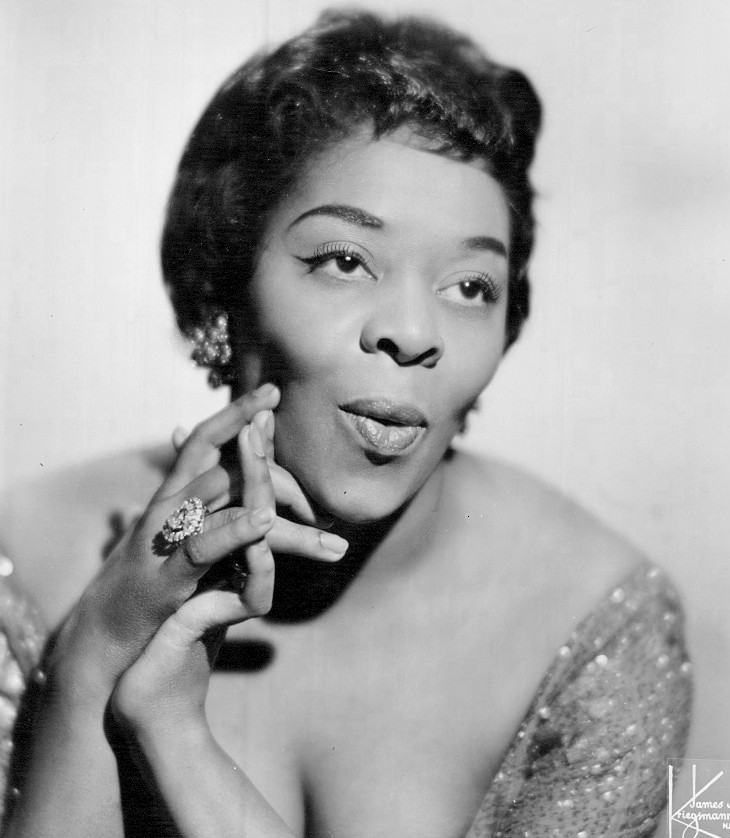

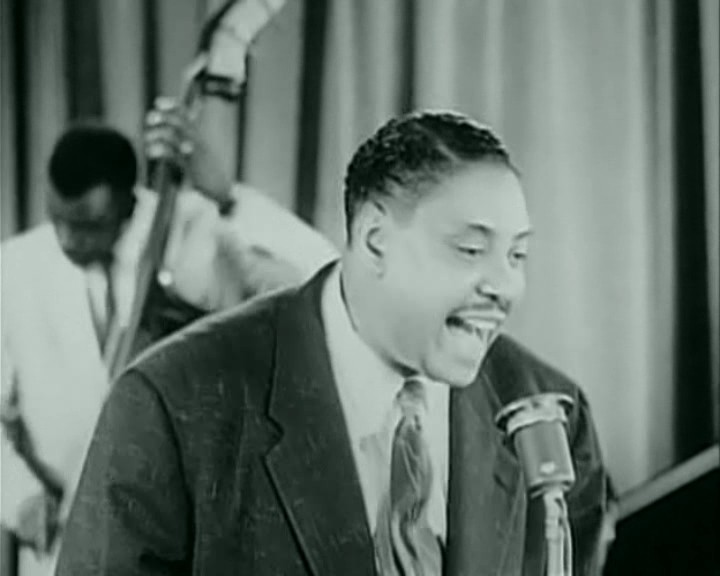
 photo: pdm-owner ↗
Billy Wright
Billy Wright first performed in the drag chorus lines of traveling Southern tent shows, learning showmanship years before he had much of a singing style to show off. He built that style, by his own account, out of whatever was popular on the jukeboxes of the late 1940s, a habit that carried him from Atlanta's 81 Theater into a contract with Savoy Records. His 1949 debut, "Blues for My Baby," rose to number three on the Billboard R&B chart, and three more top-ten hits over the next two years made him the self-styled "Prince of the Blues," resplendent in pancake makeup and a towering pompadour. Even his birth year won't settle - 1918 by the official record, 1932 by his own telling - but the throughline holds: a gospel-choir kid who turned other people's records into a whole persona, then spent it fast before rock and roll passed him by.
the sound in question
1949
Blues for My BabyBilly Wright
walk the tributaries ↓
Dinah Washington1950s · Jazz / Blues / R&B / Traditional pop
Washington is the second name on that same list, and here the debt is traceable to an actual record: Wright's breakout single "You Satisfy" reworked a song already, in one critic's words, "defined by the great Dinah Washington which is surely who Wright took it from," after an earlier, lesser-known 1946 version by Jesse Price. Wright didn't cover the song so much as gut it - new lines, a restructured arrangement, mounting stakes - until, in that same critic's assessment, it "practically becomes original by the sheer power of his performance."
listen: upstream & heresource: Spontaneous Lunacy — "Billy Wright ↗
You SatisfyDinah Washington
1949
You SatisfyBilly Wright
listen forBoth records are the same underlying song, but the critic who traced this pairing found Wright unwilling to follow its established shape - adding lines, cutting others, "restructuring it along the way and ramping up the dramatic stakes to the breaking point." Listen for that escalation in Wright's vocal: where a stock heartbreak lyric could stay level, he builds through what the same critic called "breathy pauses" and "sudden explosions of power," turning the song into something closer to a confession than a cover.
Wynonie Harris1940s · Jump blues / R&B
Wright's own account of his apprenticeship names Wynonie Harris first: "I did whatever was popular on the jukeboxes at the time: Wynonie Harris, Dinah Washington, Joe Turner..." he told the Swedish blues researcher Jonas Bernholm in 1977. The debt went past the jukebox - Wright's own break happened on Harris's bill, where Paul "Hucklebuck" Williams, a tenor player then riding high with that year's best-selling R&B disc, saw the young singer and personally brought him to Savoy Records.
listen: upstream & heresource: All About Blues Music — Billy Wright (biography; Wynonie Harris bill) ↗
1948
Good Rockin' TonightWynonie Harris
1951
Stacked DeckBilly Wright
listen forHarris's "Good Rockin' Tonight" rides a stop-time band hit before he swaggers back in on top of it, treating every pause like a dare. Wright's "Stacked Deck" works the same move a few years later, horns cutting out so his voice can fill the silence alone. Neither man sings so much as proclaims - listen for that shared bravado, a lyric delivered less as a story than as an announcement of arrival.
Big Joe Turner1950s · Blues / Jump blues / R&B
Turner is the third name on that jukebox list, and the connection here is more genealogical than documented: a blues history places him among "the heyday of Blues Shouters" - Turner fronting Count Basie's band while Harris rode with Lucky Millinder's - the same Kansas City tradition that, a few years later, produced "an exotic cross-dressing Blues Shouter called Billy Wright." No specific Wright session covers a Turner song; the debt is a shared vocal school, full-throated and undynamic, built to cut a room without a microphone's help.
listen: upstream & heresource: All About Blues Music — Blues Shouters (Big Joe Turner / Kansas City shouter lineage) ↗
1938
Roll 'Em PeteBig Joe Turner
1949
Blues for My BabyBilly Wright
listen forTurner's "Roll 'Em Pete" rides Pete Johnson's rolling boogie piano while Turner shouts flat across the beat, barely bending a note - less singing than hollering in time. Wright's "Blues for My Baby" works the same territory over a slower blues shuffle: the piano stutters, the horns hold back, and Wright's voice carries the song the way a melody line would elsewhere - the shouter's toolkit carried intact from Kansas City barrelhouses to an Atlanta radio-station session, more than a decade on.