Antonio Arcaño


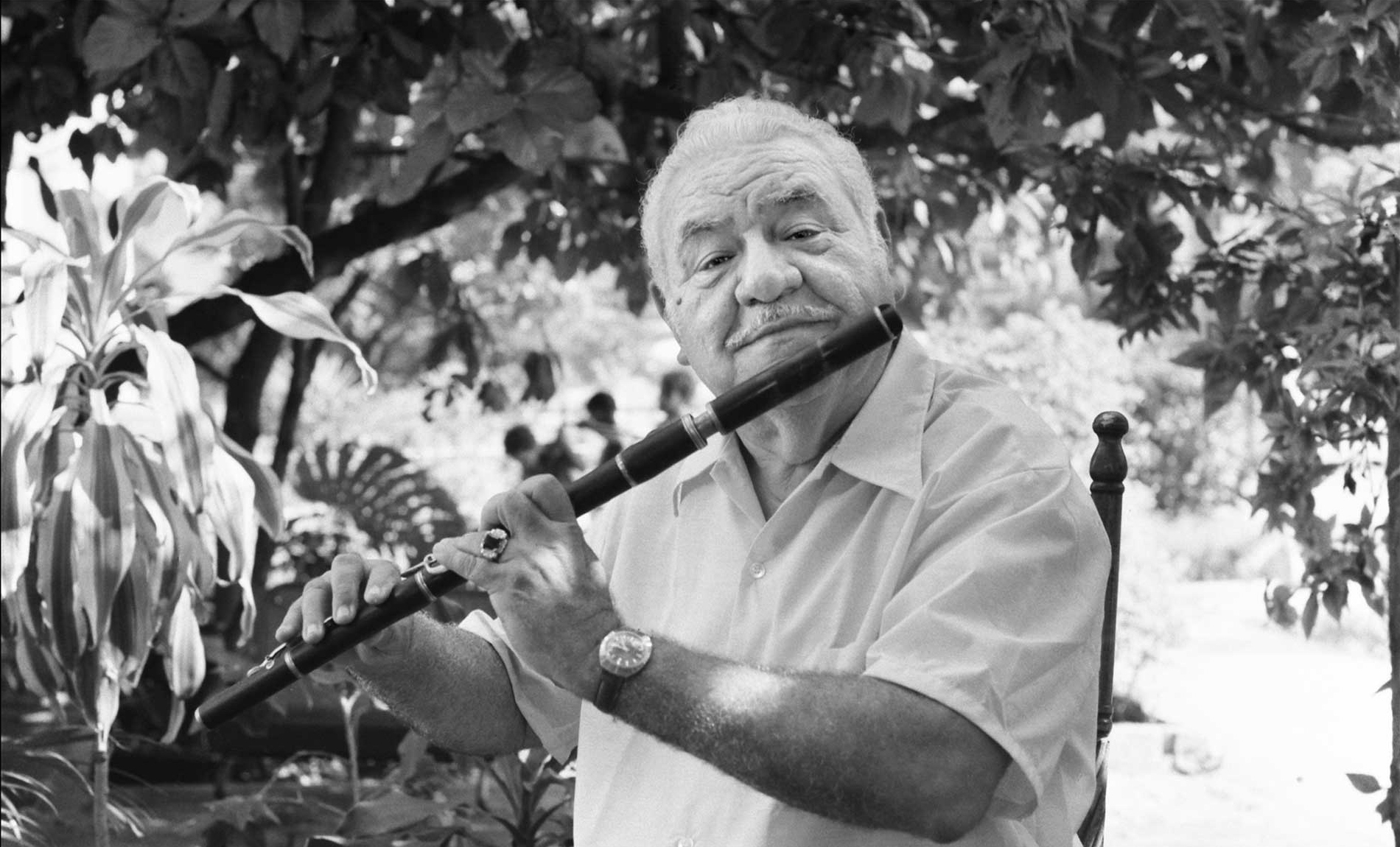 photo: mario garcía joya · public domain ↗
Antonio Arcaño Betancourt (1911-1994) was a Havana-born flautist and bandleader whose charanga, Arcaño y sus Maravillas, turned the genteel danzón into a percussive dance-floor engine. Working with bassist-composer brothers Orestes López and Israel "Cachao" López, he pushed the form's closing section into an improvised, syncopated coda the band called "nuevo ritmo" — the seed from which mambo and cha-cha-chá would grow. Ill health forced him off the bandstand by the mid-1940s, but he kept directing the Maravillas from the sidelines until the group dissolved in 1958.
Romeu's Orquesta Romeu had already proven, decades before the Maravillas existed, that a charanga could carry a whole evening on flute, strings, and piano alone — and that the piano, not the horns, could drive the rhythm. Arcaño inherited that exact instrumentation wholesale and simply asked more of it, letting piano and bass shove toward the syncopated coda that became mambo.
listen forCue Romeu's stately 'Tres Lindas Cubanas' next to Arcaño's 'Mambo' — the same flute-over-strings sound sits at the center of both, but where Romeu's piano keeps genteel, rolling time, Arcaño's rhythm section starts pulling the beat apart at the seams.
Urfé's 1910 danzón 'El Bombín de Barreto' was the first to bolt a fast, syncopated son montuno section onto the tail end of the stately danzón form — exactly the structural trick Arcaño and the López brothers would blow wide open a generation later with the mambo coda.
listen forListen for the gear-change where 'El Bombín de Barreto' peels off into its closing montuno — that lurch from ballroom decorum into a tighter, more insistent groove is the direct ancestor of the break in Arcaño's 'Broadway,' where the same trick gets stretched out and cranked up.
Failde didn't just write a hit in 1879 — he invented the container Arcaño would spend his whole career remodeling. Every rule Arcaño eventually broke (the fixed tempo, the closed structure, the ballroom decorum) was a rule Failde had written in the first place.
listen forNo recording survives of Failde's own orchestra, but the two-strain, call-and-response shape he set in 'Las Alturas de Simpson' is still legible underneath even the loosest Arcaño arrangement — try 'Chanchullo' and listen for the danzón's original stop-and-start phrasing hiding inside all the improvised swagger.