walking upstream…
Antonio Aguilar


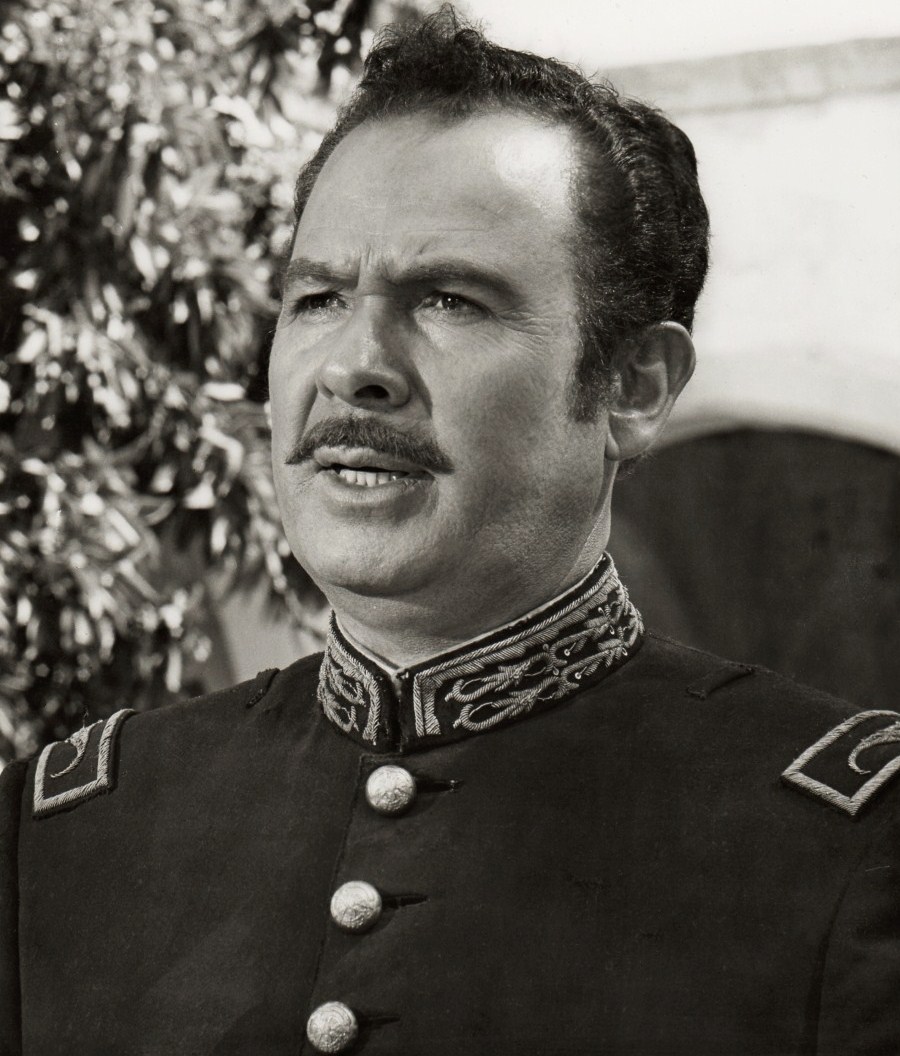 photo: unknown (20th century fox) · public domain ↗
Antonio Aguilar
sourcesThe Guardian — Antonio Aguilar obituary (early life, Musart signing, career arc) · El Heraldo de México — Pedro Infante's advice to Antonio Aguilar (Aguilar's own quoted testimony) · El Comercio (Perú) — Pedro Infante, Antonio Aguilar y la historia de una amistad (independent corroboration of the quote)
Booed off a stage in Puerto Rico, the young bolero singer might have quit — instead the jeers redirected him. Antonio Aguilar grew up working his family's fields in Villanueva, Zacatecas, meant by his parents for the priesthood until a seminary choir revealed the voice underneath. A Los Angeles scholarship led to deportation, then $12-a-week nights in Tijuana, then a Lincoln convertible and a Mexico City nightclub where Gary Cooper and Pedro Infante drank. Married to the singer Flor Silvestre in 1950, he traded opera and boleros for the rancheras and corridos of his own countryside, and the crowd that had jeered him found him instead: more than 150 albums, 164 films, and a traveling rodeo spectacle that filled Madison Square Garden six nights running. Mexico's farmboy tenor became El Charro de México, and he never let anyone forget the horse under him was real.
the sound in question
1972
Caballo Prieto AzabacheAntonio Aguilar
walk the tributaries ↓
José Alfredo Jiménez1950s-60s · Ranchera / Mariachi
Where Pedro Infante gave Aguilar a persona, José Alfredo Jiménez gave him the songs to fill it. Ranchera's best-known composer wrote in a plain, unschooled voice — he never learned an instrument, only whistled his melodies for others to transcribe — and Aguilar returned to that catalog again and again, recording "Corazón, Corazón" and the drink-and-a-kiss farewell "El Último Trago" among the standards. A music critic later called "Corazón, Corazón" Aguilar "at his romantic best," the spare guitar-and-violin arrangement built to spotlight nothing but his crooning.
listen: upstream & heresource: uDiscover Music — Best Antonio Aguilar Songs (José Alfredo Jiménez covers, career facts) ↗
Corazón, CorazónJosé Alfredo Jiménez
Corazón, CorazónAntonio Aguilar
listen forCompare the two "Corazón, Corazón" recordings and the debt is in the restraint. Jiménez's own version stays close to the words, a composer performing his lyric plainly. Aguilar's take keeps that spare, guitar-led frame — no big mariachi charge, just strings swelling under the vocal — and pours the same understatement into a bigger, trained voice, letting the tune do the work Jiménez wrote it to do rather than showing off the range he clearly had.
Pedro Infante1940s–50s · Ranchera / Bolero / Mariachi
They met on the set of Un Rincón Cerca del Cielo (1952), Aguilar's first film, with Infante already Mexico's biggest movie star and Aguilar still an opera-trained bolero singer chasing a different sound. Infante told him plainly, Aguilar recalled years later: "usted es charro, no se vista de catrín, no olvide nuestras raíces" — you're a charro, don't dress like a dandy, don't forget our roots. Aguilar brushed it off; only later did he understand Infante had been naming his future. A year before Infante's death in 1957, he said it again, more bluntly: "no que no, pelao, ves que lo tuyo es ser ranchero y de a caballo."
listen: upstream & heresource: Billboard — Mariachi Icon Antonio Aguilar Dies At 88 (1952 film debut alongside Pedro Infante) ↗
1948
Amorcito CorazónPedro Infante
1964
Gabino BarreraAntonio Aguilar
listen forNo Aguilar recording of an Infante song survives to prove the debt in a single track, so listen instead for the persona Infante urged him toward. "Amorcito Corazón" is Infante at his smoothest — a movie-star tenor, conversational, urbane, made for a nightclub scene. "Gabino Barrera," the corrido Aguilar built his career on, drops that polish for something rougher and more declarative, a voice narrating from horseback rather than crooning from a stage — exactly the shift "no se vista de catrín" asked of him.