walking upstream…
Allan Holdsworth


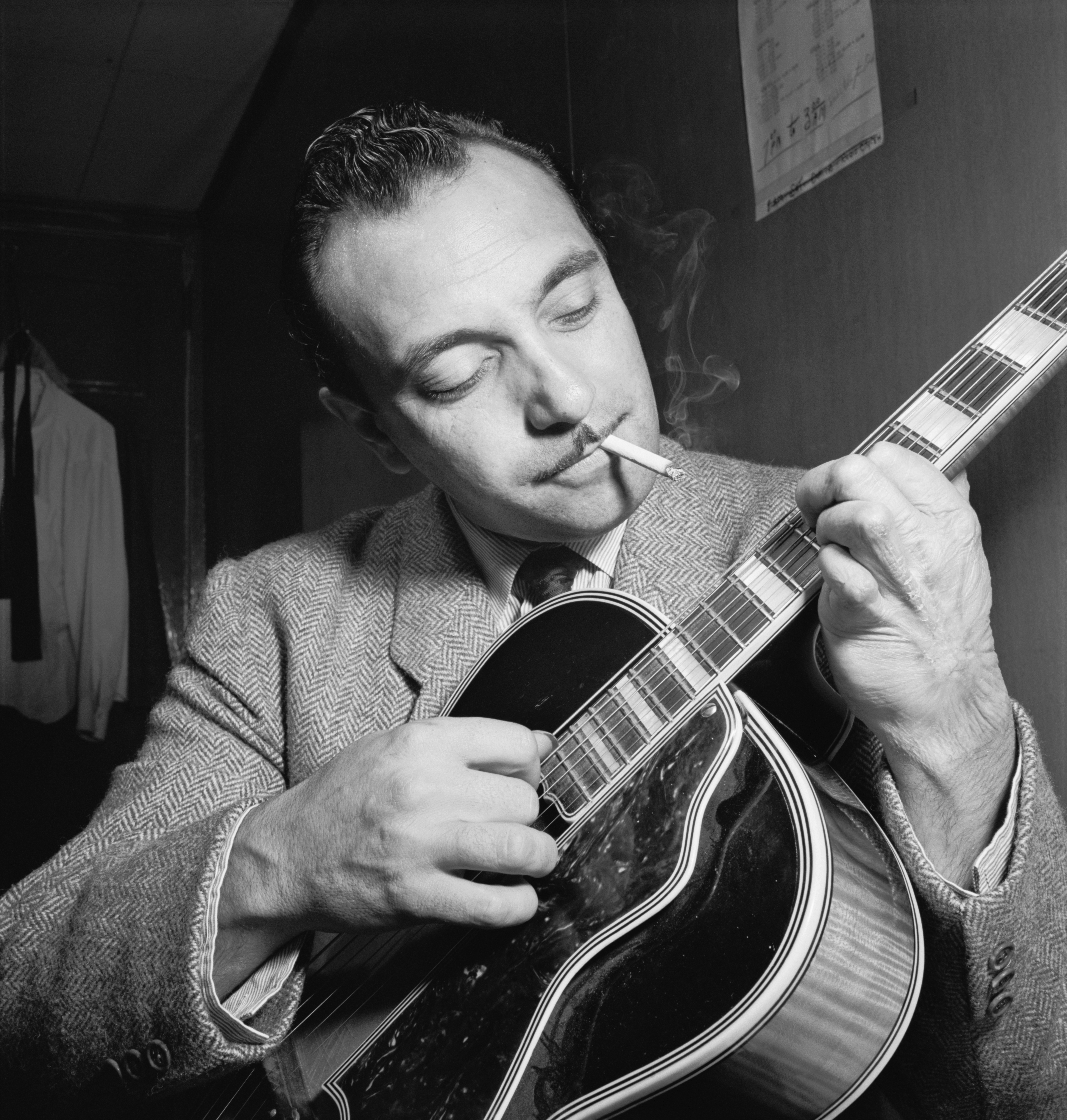
 photo: eric keyes · cc by-sa 3.0 ↗
Allan Holdsworth
English guitarist Allan Holdsworth spent the 1970s and '80s reinventing what the electric guitar could sound like, chasing a horn player's legato phrasing and a jazz harmonist's chord vocabulary through bands like Soft Machine, Gong, and U.K. before going solo. Revered by rock and fusion guitarists alike as "the man" for his liquid, non-blues-based lines and dense chord voicings, he remained a cult figure to the wider public even as virtuosos from Eddie Van Halen to Steve Vai named him as the guitarist who still had something to teach them.
the sound in question
1983
Tokyo DreamAllan Holdsworth
walk the tributaries ↓
John Coltrane1960s · Jazz / Modal jazz / Spiritual jazz
Holdsworth said hearing John Coltrane at eighteen "changed my whole life," explaining that Coltrane "sounded like he short-circuited or bypassed something... he didn't sound like anyone else" — and that Coltrane's Sound remained his favorite record of all time. As a kid he'd actually wanted to play saxophone but couldn't afford one; Coltrane's example is why he spent his career trying to make a fretted, percussive instrument breathe and connect notes the way a horn does.
listen: upstream & here
1964
Central Park WestJohn Coltrane
1985
Devil Take the HindmostAllan Holdsworth
listen forColtrane's flowing, harmonically dense ballad "Central Park West" shows the legato, connected-note ideal Holdsworth chased; his own solo on "Devil Take the Hindmost" is often cited as the closest he ever got to making a guitar sing like Coltrane's tenor.
Charlie Christian1930s–40s · Swing / Jazz / Bebop
Exposed to Charlie Christian through his family's Benny Goodman records, a teenage Holdsworth "tried to learn Charlie Christian solos" and said he "absorbed them quite quickly" — his first real education in single-note improvising, before he discovered jazz's more harmonically adventurous players.
listen: upstream & here
1941
Solo FlightCharlie Christian
1982
Letters of MarqueAllan Holdsworth
listen forChristian's clean, connected eighth-note swing lines on "Solo Flight" are the ancestor of the fast, one-note-at-a-time runs Holdsworth plays on "Letters of Marque," before Holdsworth's own more chromatic, legato style takes over.
Django Reinhardt1930s · Gypsy jazz / Jazz / Swing
Holdsworth said he "loved Django Reinhardt" and the sound he got, from early listening sessions alongside Benny Goodman records, even though something about the electric guitar pulled him toward a different vocabulary altogether. That early exposure to Reinhardt's rich, singing chord-melody lines shows up less in Holdsworth's scalar soloing than in his dense, voice-led chordal passages.
listen: upstream & here
1940
NuagesDjango Reinhardt
1986
Non-Brewed CondimentAllan Holdsworth
listen forReinhardt's "Nuages" floats a lyrical melody over lush, voice-led chords; Holdsworth's chordal intro and theme on "Non-Brewed Condiment" chase a similar melodic, almost vocal quality, harmonized instead with Holdsworth's own wide-interval chord voicings.