walking upstream…
808 State

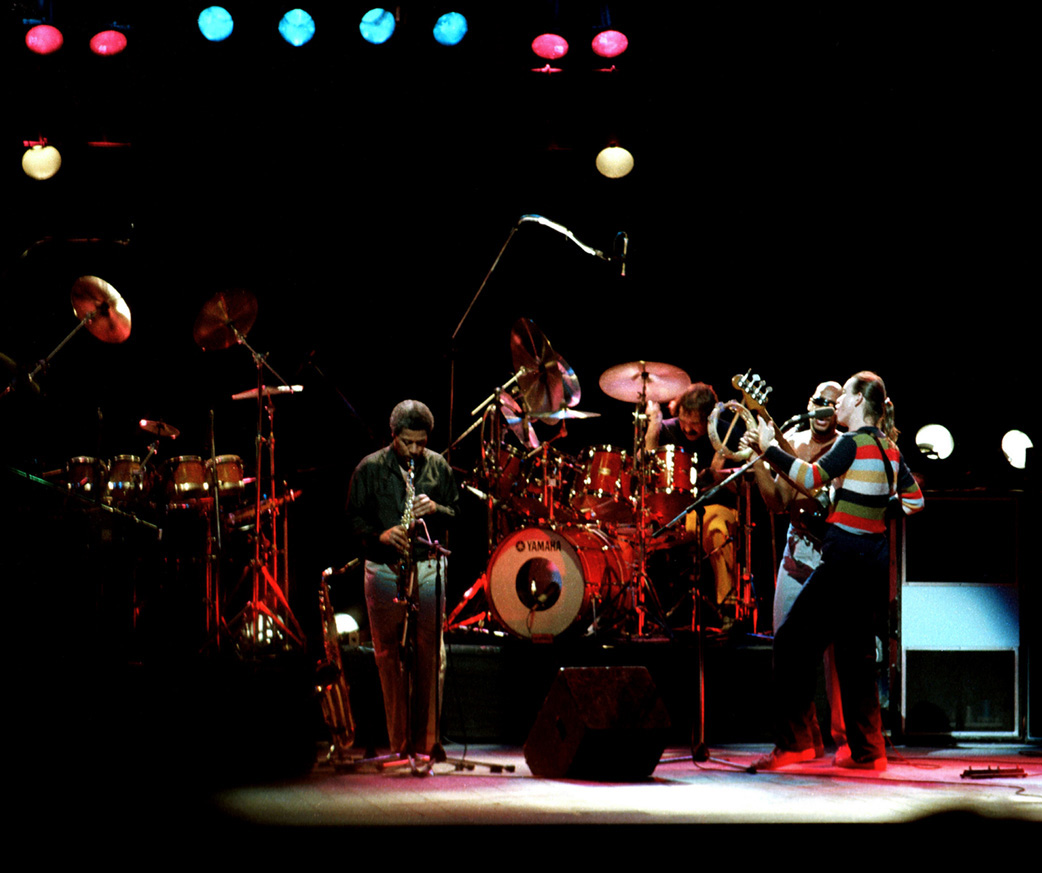

 photo: music tech fest · cc by 2.0 ↗
808 State
sources5 Magazine — 808 State, From the Beginning (formation, Eastern Bloc, hip-hop origins) · Yorkshire Evening Post — Music interview · The Mouth Magazine — Interview · The Quietus — Graham Massey Of Sisters Of Transistors On His Keyboard Addiction (Zawinul as synth hero) · Dutch Girl in London — Interview with Graham Massey Part 2 (Zawinul's Dialects shaping synth thinking) · The Quietus — Graham Massey On 808 State's Blueprint (Pacific State soprano-sax lead, jazz odyssey)
In 1987, Graham Massey — a guitarist in Factory Records post-punk outfit Biting Tongues — was one of the regulars drifting into Manchester's Eastern Bloc record shop, run by an older presence the kids nicknamed "Fagin": Martin Price. Massey met engineering student Gerald Simpson there too, and the three, in Massey's words, "raided somebody's savings" to cut a record, gigging afterward as a hip-hop crew before house imports off American import racks tipped them into acid house as 808 State. Their 1988 debut Newbuild and the crossover hit "Pacific State" made them figureheads of the coming rave explosion. But ask Massey what actually built the group's ear, and the answer runs stranger than the genre suggests: not the rave records around them, but a synth colorist from a jazz-fusion band and a free-jazz saxophonist's electric outfit.
the sound in question
1990
Cubik808 State
walk the tributaries ↓
New Order1980s · Synth-pop / Dance-rock / New wave
New Order weren't a change in sound so much as a permission slip. Massey, watching them from across Factory Records' small Manchester orbit, says "that was probably the biggest influence — to act locally and think globally. It gave us a lot of confidence." The debt wasn't only philosophical: for their earliest gigs, 808 State built abstract, mostly beatless acid sets around a crowd-pleaser — their own 1988 remixes of New Order's "Blue Monday" and "Confusion," reworked for the live set and later surfaced on the archival release Prebuild.
listen: upstream & heresource: BBC Manchester — Saved from the vaults, back on the decks (New Order influence, 1988 Blue Monday/Confusion remixes) ↗
1983
Blue MondayNew Order
1988
Blue Monday (808 State's So Hot Mix)808 State
listen forPlay New Order's 1983 original against 808 State's own retooling and the handoff is direct: the same yearning bassline hook survives, but the icy synth-pop sheen gives way to a rawer, squelchier acid pulse built for a sweatier room. Massey later shrugged the mix off as crowd-pleasing filler next to stranger material — "it was kind of catering a little bit because the rest of it was so abstract" — but as a record of Manchester post-punk handing its keys to acid house, it's blunt and literal.
Weather Report1970s · Jazz fusion / Jazz-funk / Jazz
Massey's deepest debt in the group runs through a jazz musician, not a house record. He calls Weather Report's keyboardist Joe Zawinul "my all time synth hero," crediting him with treating the synthesizer as "a very credible instrument" rather than a novelty. Zawinul's mid-80s solo album Dialects stuck with him specifically: "I think that was a big influence on how I was thinking with synthesizers in the mid till late 80s," he says, "so when it came towards making house music, half of my head was going that way."
listen: upstream & here
1986
The HarvestWeather Report
1989
Pacific State808 State
listen forZawinul built Dialects out of color and texture rather than riffs; the same instinct drives "Pacific State," 808 State's breakthrough, whose lead line is so vocal that listeners assume it's a clarinet — it's a soprano-sax patch, Massey has pointed out, and the piece has "turned in to a jazz odyssey" onstage ever since. Listen for a synth line built to phrase and breathe like a horn section rather than just hold a chord, carried whole from one genre into another.
Ornette Coleman1960s · Free jazz / Avant-garde jazz
The most specific debt Massey names runs through a jazz musician 808 State never worked with and rarely saw play. Ornette Coleman's harmolodic idea — "you can play off key; you can play any key off another key" — reached Massey secondhand, through Coleman's own electric group Prime Time. He says the loose, bolted-together melodies on 808 State's 1988 debut Newbuild were "deliberately" built that way, offering a direct test: play Newbuild "next to a record by the band called Prime Time... there's a very similar kind of tension and poly-tonality to the two things."
listen: upstream & heresource: Dutch Girl in London — Interview with Graham Massey ↗
1982
Times SquareOrnette Coleman
1988
Flow Coma808 State
listen forCue up Prime Time's "Times Square" against Newbuild's "Flow Coma" and listen for the shared trick: neither track settles into one key centre, with clashing melodic lines bolted end to end instead of resolving into each other. Prime Time gets there with two guitars and drums pulling apart in real time; 808 State gets there with looped drum machines and a synth line that keeps sliding sideways instead of landing — the same appetite for productive friction, played on entirely different tools.