walking upstream…
Youssou N'Dour
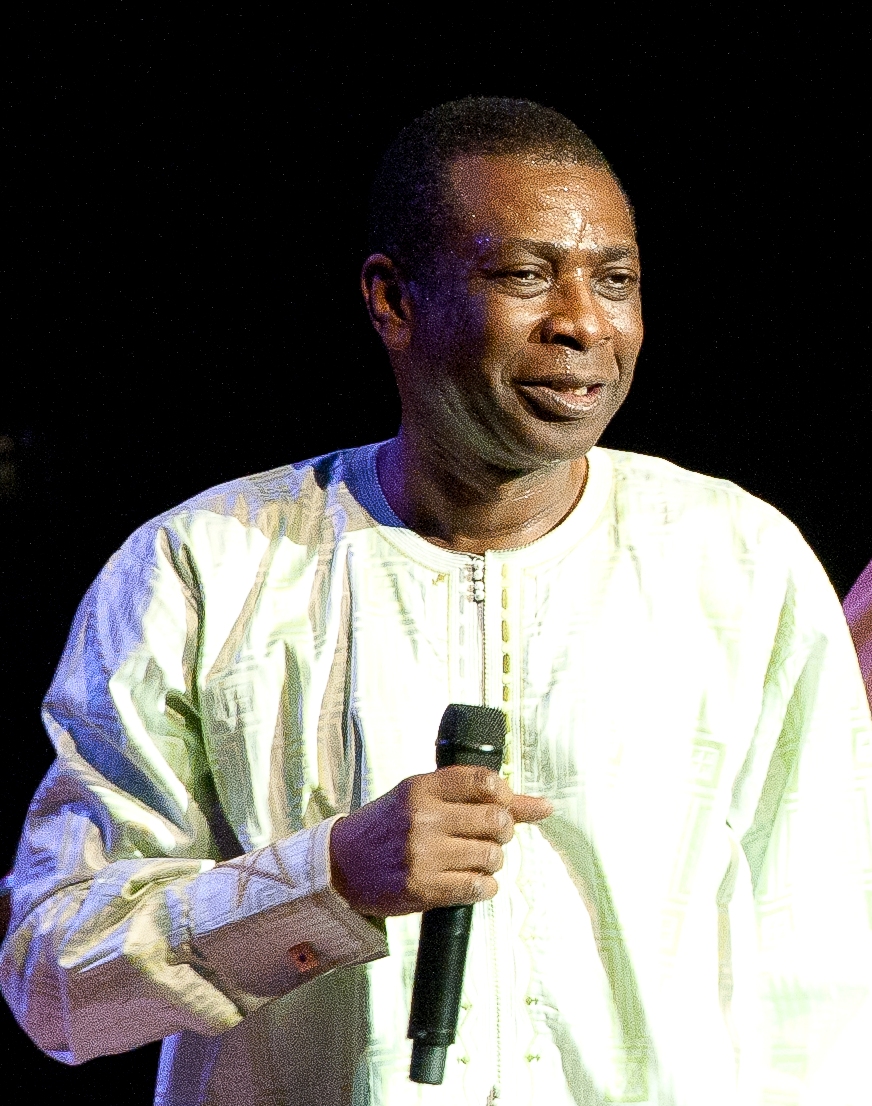 photo: marc ras · cc by 3.0 ↗
Youssou N'Dour
sourcesWikipedia234 · Real World Records
Born in 1959 in Dakar's Medina quarter to a Serer father and a Tukulor griot mother, Youssou N'Dour began singing at neighborhood religious ceremonies at twelve and was fronting Ibra Kassé's storied Star Band by sixteen, absorbing the Cuban-tinged dance-band sound that ruled Dakar's nightclubs. Splitting from Star Band in 1977 to found Étoile de Dakar and then Super Étoile de Dakar, he forged mbalax — wedding sabar polyrhythm and griot praise-singing to that Latin dance-band chassis — into Senegal's national sound, and with 1994's "7 Seconds" became one of the first African voices to cross fully into the global pop mainstream. A devout Mouride who calls himself a "modern griot," he has spent five decades using that same praise-singing inheritance to sing Senegalese history, migration and faith back to the world.
the sound in question
1994
7 SecondsYoussou N'Dour
walk the tributaries ↓
Star Band de Dakar1960s–70s · Afro-Cuban / Son / Salsa
Kassé hired the 16-year-old N'Dour into Star Band in 1976 after a wave of member defections, dropping him into a working dance band built entirely around Cuban son montuno and salsa repertoire — the horn-driven, clave-locked chassis mbalax would later graft sabar rhythm onto.
listen: upstream & here
SimbonbonStar Band de Dakar
1979
Thiapa ThiolyYoussou N'Dour
listen forCue Star Band's rolling, brass-heavy son montuno on "Simbonbon" against N'Dour's own "Thiapa Thioly," cut a couple of years later with Étoile de Dakar — same horn-and-guitar dance-floor engine, now carrying a Wolof lyric and a sabar break instead of a coro sung in Spanish.
Yandé Codou Sène1990s–2000s · Njuup / Serer Traditional Music / World Music
The Sine-Saloum griotte of Senegal's poet-president Léopold Sédar Senghor and the era's definitive voice of njuup — the sacred Serer initiation-rite chant Wikipedia and Senegalese critics alike credit as mbalax's actual root — Sène recorded and toured with N'Dour starting in 1995, and is widely described, alongside him, as having "inspired him immensely."
listen: upstream & heresource: Wikipedia ↗
1995
GaindeYandé Codou Sène
1998
BirimaYoussou N'Dour
listen forHer keening, unaccompanied call-and-response delivery on "Gainde" (1995) is the njuup vocal template in its rawest form; N'Dour draws on that same declamatory, history-reciting style three years later on "Birima," his griot-narrated song about a Cayor kingdom ruler.
Ndeye Sokhna MboupGriot Praise Song
Of Tukulor griot lineage herself, N'Dour's mother brought her young son along to sing at neighborhood religious ceremonies, and it's there — not in Star Band's nightclub sets — that he says he first learned the griot's actual trade: praise-singing genealogy and history rather than simply performing.
listen: upstream & here
Praise songs at Dakar religious ceremonies (traditional, unrecorded)Ndeye Sokhna Mboup
1984
Immigrés / Bitim RewYoussou N'Dour
listen forNo recording of her ceremony singing exists, but the technique carries whole into N'Dour's "Immigrés / Bitim Rew" (1984) — the same direct, declamatory praise-singing address, now aimed at Senegalese migrants in Paris instead of a wedding party.