walking upstream…
ROSÉ



sourcesThe Bias List — "Song Review · NME — "Hear BLACKPINK's Rosé cover Coldplay's 'Viva la Vida' for 'Pachinko' season two" (Coldplay 2024 cover) · Dazed — "Rosé · Vogue Australia — "Blackpink's Rosé is Vogue's April cover star" (bio, YG audition story) · Wikipedia — general biographical background
In 2012, an Australian teenager named Roseanne Park — born in Auckland, raised outside Melbourne on piano lessons and church choir — heard that a Korean label was holding an open audition in Sydney. "I thought I had no chance," she said, but her father pushed her onto the plane anyway; she won a spot among nearly 1,000 hopefuls, moved to Seoul, and by 2016 was the main vocalist of BLACKPINK, one of pop's biggest groups. Eight years later she went solo with rosie, trading the group's "alter ego" armor for diary-plain confession sung over acoustic guitar: "This is all me," she said of the record. The Bruno Mars duet "APT." turned that intimacy into a global hit — proof the girl who once downloaded concert footage at home had learned to perform as herself, not a persona.
the sound in question
2024
APT.ROSÉ
walk the tributaries ↓
John Mayer2000s–10s · Blues rock / Pop rock / Singer-songwriter
After Rosé covered "Slow Dancing in a Burning Room" on the Korean variety show Sea of Hope, John Mayer retweeted it, called it gorgeous, then had a pink Stratocaster delivered to her label with no warning. "I thought it was something very serious," she said. "She was like, 'John really wanted to send this to you,' and I was just like, 'Oh my god.'" Of Mayer himself: "He seems like the sweetest person ever. I'm going to treasure it for life." A guitarist's tribute answered with an actual guitar.
listen: upstream & heresource: NME — "BLACKPINK's Rosé says she will 'treasure' John Mayer-gifted guitar 'for life'" (John Mayer cover + guitar gift) ↗
2006
Slow Dancing in a Burning RoomJohn Mayer
2021
Slow Dancing in a Burning Room (Sea of Hope cover)ROSÉ
listen forMayer's studio original rides a clean, unhurried guitar figure under a vocal that stays level until the chorus finally lets the ache through. Watch Rosé's Sea of Hope performance and hear her keep that exact shape — she strips the full band down to just her guitar and voice, letting the same slow-burn dynamic do the work, restraint held right up until the line breaks open, so the cover reads less like mimicry than like she already spoke Mayer's musical language.
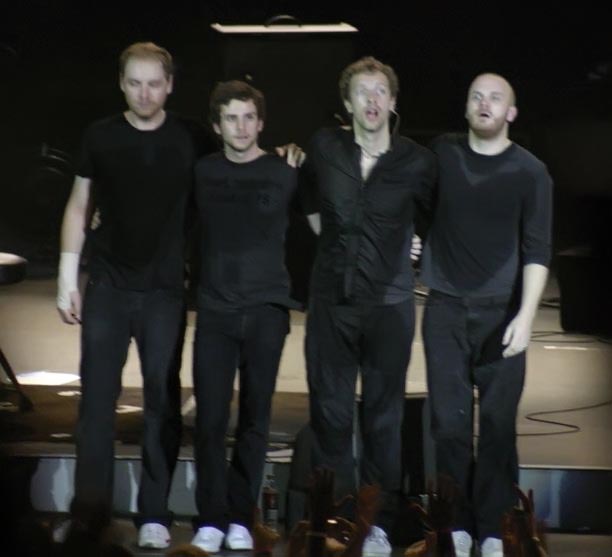
Coldplay2000s · Alternative rock / Pop rock / Post-Britpop
Twice, two years apart, Rosé recorded her own version of "Viva la Vida" — first a stripped birthday cover with producer LØREN in 2022, later a version for the Apple TV+ series Pachinko. Coldplay noticed both times; after the first, they posted it to their Instagram Story with a simple verdict: "Love this. What a voice. Happy birthday Rosé." Three years later she was guesting onstage with the band in Seoul, watching 40,000 fans move as one. "It gave me a whole new perspective on how it could feel to be a part of a crowd," she said.
listen: upstream & heresource: NME — "Coldplay react to BLACKPINK's Rosé's cover of 'Viva La Vida'" (Coldplay 2022 birthday cover) ↗
2008
Viva la VidaColdplay
2022
Viva la Vida (Live Studio Cover)ROSÉ
listen forColdplay's original swells on layered strings, piano, and a full-band crescendo built for an arena to sing back. Rosé's 2022 cover strips all of that away — just her voice and LØREN's guitar, the melody carried on breath and phrasing instead of production. Listen for how the song's climb ("I used to rule the world") lands just as hard with nothing behind it but two instruments, proof the song's power was in the writing, not the orchestration Coldplay built around it.
Taylor Swift2010s-20s · Pop / Country pop / Singer-songwriter
Backstage at an impromptu hangout hosted by producer Jack Antonoff, Rosé found herself talking to Taylor Swift while working out whether to go solo. "I told her I'm such a huge fan and I just had some questions," she recalled. "As soon as she met me, she's like 'Spill, let me help you out.'" Swift gave her a rundown of what independence would cost and her phone number besides. "She's killed it in the game, and she was kind enough to walk me through," Rosé said — testimony from one diaristic pop songwriter's mentor to the next, arriving just as Rosé began writing her own confessional album, rosie.
listen: upstream & heresource: i-D — "Blackpink's Rosé on Her Solo Album, 'Toxic' Twenties and Taylor Swift Friendship" (Taylor Swift mentorship, bio) ↗
2012
I Knew You Were TroubleTaylor Swift
2024
Toxic Till the EndROSÉ
listen forCritics heard the debt before Rosé named it: one review called her single "Toxic Till the End" a song that "exists in a post-Taylor Swift universe," its "diaristic lyricism and soft, synth-meets-guitar atmosphere" recalling "highlights from Swift's catalog." Cue Swift's breakup anthem "I Knew You Were Trouble" beside it and listen for the shared engineering: a plainspoken, journal-entry verse that detonates into a big, synth-scaffolded chorus built to be sung back by a stadium, not just felt alone in a bedroom.