walking upstream…
Rihanna


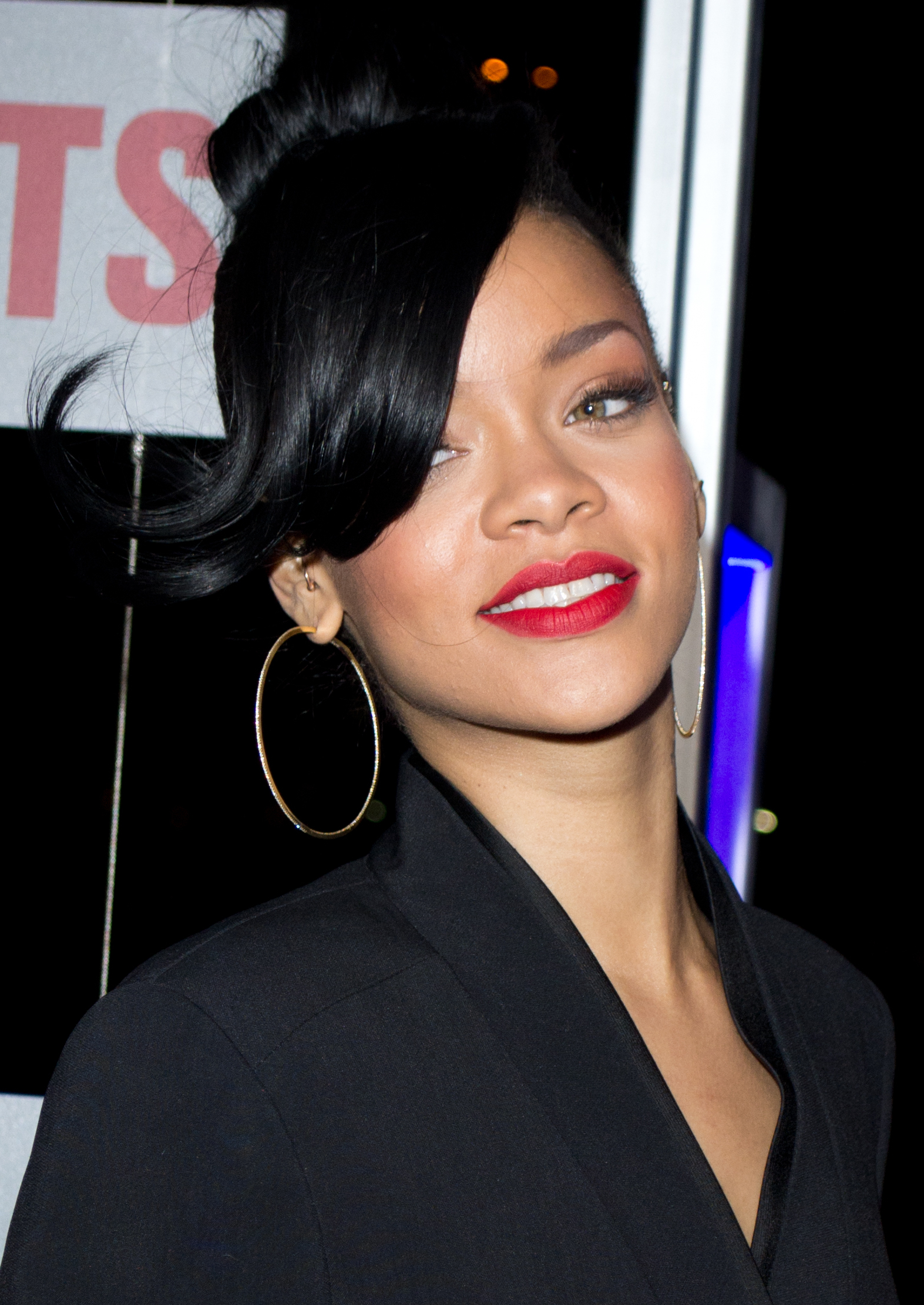
sourcesWikipedia — Rihanna (biography, early life, stated influences) · Stereogum — The Number Ones · HotNewHipHop — Rihanna's Reggae Album Inspired by Bob Marley (favorite songs, Buffalo Soldier resonance) · The Fader — Rihanna's 2018 Vogue Interview (reggae album plans, Supa Dups) · Rolling Stone — Rihanna, Bruno Mars, Sting Pay Tribute to Bob Marley at the 2013 Grammys
In November 2012, on The Ellen Show, Rihanna traced her whole career back to one record: Mariah Carey's "Vision of Love" was, she said, the song that made her want to pursue music professionally. She was born Robyn Fenty in 1988 in Saint Michael, Barbados, in a household strained by her father's addiction, with reggae from the television and soca from the street the constants her home life couldn't guarantee. At fifteen, producer Evan Rogers heard her audition on the island and brought her to New York; three years later, "Pon de Replay" turned that Caribbean cadence into a global hit. What followed was a career built less on one sound than on the discipline of discarding it — reggae-pop debut, gothic Rated R, maximalist Loud, hushed ANTI — an island singer who kept reinventing the terms of pop stardom.
the sound in question
2007
UmbrellaRihanna
walk the tributaries ↓
Mariah Carey1990s–2000s · Pop / R&B / Soul
Rihanna has been explicit about the debt. Asked on The Ellen Show in 2012 what drew her to music, she named an American singer rather than a Barbadian one: "I identified with her in so many ways. She was bi-racial, she was also young and I remember just hearing her story and really being connected to it." The specific record was Carey's 1990 debut single "Vision of Love," which Rihanna has credited as the song that made her want to pursue music as a career — years before Evan Rogers ever heard her sing.
listen: upstream & heresource: Capital FM — Rihanna's Mariah Carey Inspiration (2012 Ellen Show quotes on Vision of Love) ↗
1990
Vision of LoveMariah Carey
2007
UmbrellaRihanna
listen for"Vision of Love" spends three minutes building to a single moment: Carey's voice leaping into an extended, unaccompanied run at the bridge, a vocal display so distinct it reset what a pop chorus could ask of a singer. "Umbrella" doesn't chase that acrobatics, but it keeps the underlying idea — the song's hook isn't a lyric, it's Rihanna's low, unhurried "ella, ella, eh, eh, eh," repeated until the voice itself, not the words, is what a listener carries out of the room.
Bob Marley1970s · Reggae / Roots reggae / Ska
Marley isn't a discovered influence for Rihanna; he's an inherited one. Growing up in Barbados she watched his videos on Caribbean television before she could explain why they mattered, and as an adult she built a room in her Los Angeles home she calls a shrine, painted floor to ceiling in the colors of the Jamaican flag. "He's one of my favourite artists of all time — he really paved the way for every other artist out of the Caribbean," she has said, naming "No Woman, No Cry" and "Redemption Song" among her favorites, and telling Vogue in 2018 she was planning a reggae album built in his honor.
listen: upstream & heresource: Capital FM — Rihanna's Bob Marley Shrine ("paved the way" quote, shrine details) ↗
1974
No Woman, No CryBob Marley
2005
Pon de ReplayRihanna
listen forMarley's "No Woman, No Cry" rides a slow, rocking one-drop beat under a plainspoken, conversational vocal — reggae's heartbeat carrying the weight instead of the singing straining to. "Pon de Replay," a Barbadian teenager's first single three decades later, keeps that same unhurried bounce underneath its dancehall chatter and pop polish; listen for how Rihanna's request-the-DJ patter sits behind the beat rather than on top of it, the same rhythmic patience Marley built his entire sound around.
Madonna1980s-90s · Pop / Dance-pop / Dance / Electronic
Rihanna named Madonna her idol and said she wanted to be the "Black Madonna," pointing to how Madonna kept remaking herself without losing her audience. "If I had to examine her evolution through time, I think she reinvented her clothing style and music with success every single time," she told PopCrush, crediting Madonna directly for pushing her past the guarded persona of her early albums: "I want to have more fun with my music, my image and be more experimental... that's something Madonna taught me through her career."
listen: upstream & heresource: PopCrush — Rihanna Talks Madonna's Inspiration, Lady Gaga's Fashion (reinvention quotes) ↗
1992
EroticaMadonna
2010
S&MRihanna
listen forMadonna's 1992 title track "Erotica" set a template Rihanna would revisit two decades later: a deadpan, dominatrix-voiced vocal laid over a stripped, insistent groove, daring radio to flinch. The music site Stereogum later placed Rihanna's 2010 hit "S&M" in that same lineage of BDSM-imagery pop, alongside Madonna's; listen for how neither song raises its voice even as the lyrics turn explicit, letting the calm of the delivery do the provoking instead of the words themselves.