walking upstream…
Queen Latifah

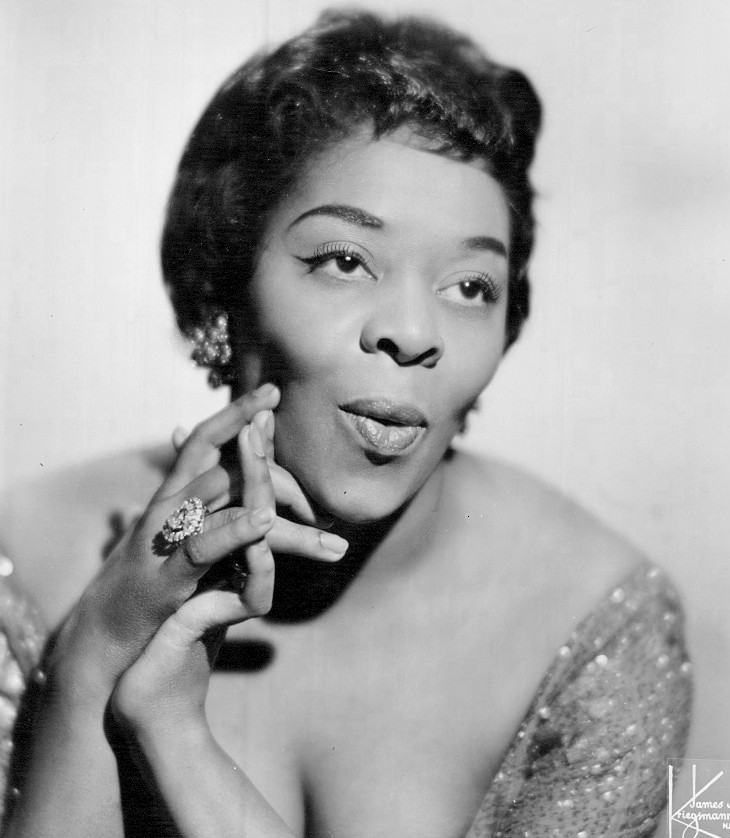

 photo: gage skidmore · cc by-sa 3.0 ↗
Queen Latifah
Dana Owens grew up in Newark and East Orange, New Jersey, singing in her school chorus years before she rapped a word — her father, she has said, kept New York's jazz station WBGO on at home. At 16 she was rapping with the Flavor Unit crew under producer Mark the 45 King, who passed her demo up a chain that ended at Tommy Boy Records; the Native Tongues collective nicknamed the teenager "Mama Zulu." Her 1989 debut, All Hail the Queen, folded reggae and funk into rap and drew the tag "the Aretha of rap." Fifteen years later she circled back to the singing she had set aside, recording jazz and soul standards as Dana Owens; a decade after that she inhabited blues pioneer Bessie Smith on screen, calling the role a debt she still carries into every new song.
the sound in question
1989
Ladies FirstQueen Latifah
walk the tributaries ↓
Bessie Smith1920s · Blues / Classic female blues / Vaudeville
Latifah spent more than two decades trying to get Bessie Smith's story onto a screen before she played her in HBO's "Bessie" (2015), and she talks about Smith's voice the way one singer sizes up another. "You can also hear how she jumps between different tempos and rhythms," she told NPR's Arun Rath, "that's something I enjoy doing personally with my band members, when we jump from hip-hop to jazz to gospel." For the soundtrack she re-recorded Smith's own repertoire — "Preachin' the Blues," "Young Woman's Blues," "Down Hearted Blues" — in character, note for note. "Inhabiting her has inhabited me," she said; it left, in her word, a stamp.
listen: upstream & heresource: NPR — "In HBO's 'Bessie,' Queen Latifah Stars As Empress Of The Blues" (backs the Bessie Smith influence) ↗
1927
Preachin' the BluesBessie Smith
2015
Preachin' the BluesQueen Latifah
listen forSmith's 1927 "Preachin' the Blues" rides a single insistent piano vamp while her voice slides and growls around the beat, refusing to sit still inside a bar line. Latifah's 2015 vocal for the "Bessie" soundtrack chases the same trick — she slurs into notes, drags syllables behind the beat, then snaps back on time, the tempo-jumping she named as Smith's specific gift. It is a rare recorded moment of Latifah singing someone else's blues phrasing rather than her own, on purpose, for the woman she says never left her.
Dinah Washington1950s · Jazz / Blues / R&B / Traditional pop
In 2004, promoting a covers album titled after her own given name, Latifah told NPR's Michele Norris exactly whose records she had grown up on: "I loved Dinah Washington, I loved Sarah Vaughan, I liked a big band sound. I liked to watch Bing Crosby and hear him sing on TV." She did not just cite Washington — she opened "The Dana Owens Album" with a new vocal take on "Baby Get Lost," the record that had made Washington a No. 1 R&B star in 1949. "I've never wanted to be put into a box, not musically," Latifah said of the detour hip-hop fans did not expect.
listen: upstream & heresource: NPR — "Queen Latifah ↗
1949
Baby Get LostDinah Washington
2004
Baby Get LostQueen Latifah
listen forWashington's 1949 original struts on a jump-blues horn section and her own brassy, note-bending phrasing — she snaps off each line like she's dismissing the man in it. Latifah's 2004 remake keeps the same brisk tempo and horn-driven arrangement but sings it smoother, trading Washington's bite for a rounder, more legato delivery — the sound of a rapper-turned-vocalist finding the standard's shape before making it her own. Together the two versions trace how a big-band-era kiss-off aged into a 21st-century torch song without losing its swagger.
Afrika Bambaataa1980s · Electro / Hip hop / Funk
Asked in 2023 to name the record that actually rewired her ear — not just the first rap song she memorized on Newark's streets, that was "Rapper's Delight" — Latifah picked the one that arrived three years later: Afrika Bambaataa and the Soul Sonic Force's "Planet Rock." "It changed the sound," she told the Associated Press. "It's more of a synthesized, 808s, hi-hats... Some of hip-hop in the original days was live music, live bands playing break records." Bambaataa's group had swapped the band for a drum machine and a Kraftwerk loop, and Latifah heard the future in it before she ever wrote a rhyme.
listen: upstream & heresource: Associated Press (via Fox4) — "Queen Latifah, Chuck D and more rap legends on 'Rapper's Delight' and their early hip-hop influences" (backs the Afrika Bambaataa influence) ↗
1982
Planet RockAfrika Bambaataa
1989
Come Into My HouseQueen Latifah
listen forPlay "Planet Rock" first: the beat is entirely electronic, a clattering drum machine and vocoder chant with no live band anywhere in the mix. Latifah's 1989 club cut "Come Into My House" works from the same blueprint — synthesizer stabs, a programmed four-on-the-floor pulse, no horns or bassist in sight — the house-music extension of the drum-machine sound she singled out by name. It is the sonic lane she described to the AP, still audible seven years later in a very different, very New Jersey record.