Nikolai Zverev
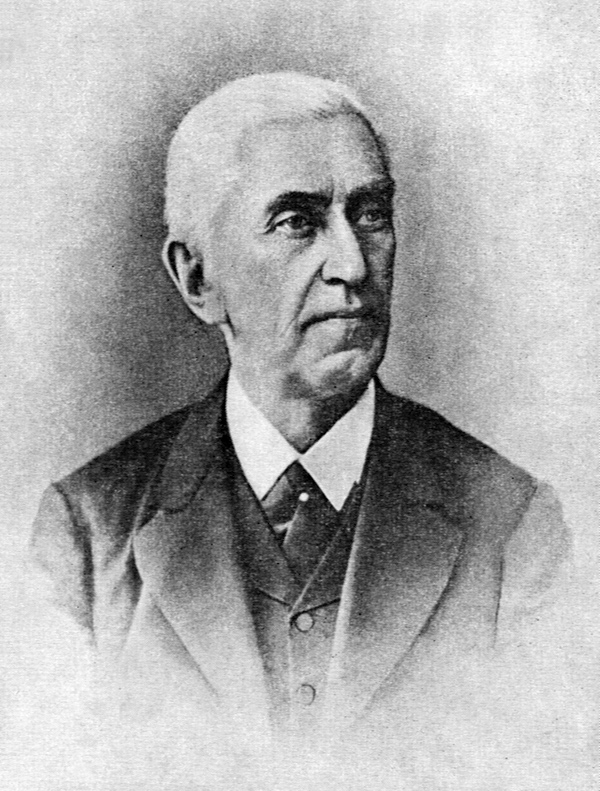 photo: unknown author · public domain ↗
A young Sergei Rachmaninoff arrived at Zverev's Moscow household already dreading the man he had been sent to study with, having heard tell of his severity and "heavy hand," he recalled decades later. That severity was Nikolai Zverev's whole legacy: born into an aristocratic family in 1833, he studied mathematics and physics at Moscow University while taking piano lessons on the side, gave up a civil-service post in Saint Petersburg, and returned to Moscow in 1867 to teach privately, before Nikolai Rubinstein installed him at the Moscow Conservatory in 1870. He never performed publicly and left no compositions of his own — only a household of boarders drilled three hours a day, among them Rachmaninoff, Scriabin, Siloti, Igumnov, and Goldenweiser. Zverev spent decades demanding of others the discipline he had first been drilled in himself, in rooms he did not run.
In the 1850s, while Zverev sat through Moscow University lectures on mathematics and physics, his real education was happening on the side, at the piano of Alexander Dubuque — a teacher one piano-archive project credits with "carrying John Field's piano tradition into the second half of the nineteenth and early twentieth centuries, particularly through his student Nikolay Zverev." The debt outlasted the lessons: around 1867, restless in a Saint Petersburg civil-service post, Zverev was talked out of it by his old teacher and into the private teaching career that made him famous.
listen forDubuque, born in 1812, predates recording by decades, and Zverev left nothing either — the transmission here is a career, not a lick. What's documented is a straight line: one archival project credits Dubuque with carrying John Field's own piano tradition down specifically through Zverev, and then, in 1867, talking his former pupil out of a desk job and into the teaching room that made him famous. Every pianist who ever sat under Zverev's discipline was, at one remove, sitting under Field's.
Zverev's second teacher arrived after Moscow, once he had traded university for a Saint Petersburg civil-service desk he couldn't stand. Adolf von Henselt was already the Conservatory's most celebrated pianist there, a man who had driven his own hands past injury chasing technique in the 1830s and could reportedly span an eleventh at the keyboard. Wikipedia's account goes further, crediting Henselt's insistence on practice as the direct root of the three-hour daily regime Zverev later forced on Rachmaninoff and Scriabin — a specific claim its own citation doesn't actually support, though the tutelage itself is corroborated independently.
listen forNo recording survives on either side: Henselt died in 1889 and Zverev in 1893, both before commercial recording reached Russia. What is on record instead is the discipline itself — the same three-hours-daily standard, enforced without exception, that Rachmaninoff remembered dreading as a boy in Zverev's house. Whether that standard began with Henselt specifically can't be confirmed from the print sources here; what is certain is that Zverev learned obsessive practice from a teacher famous for it, years before he ever taught it to anyone else.