walking upstream…
Nelly Furtado


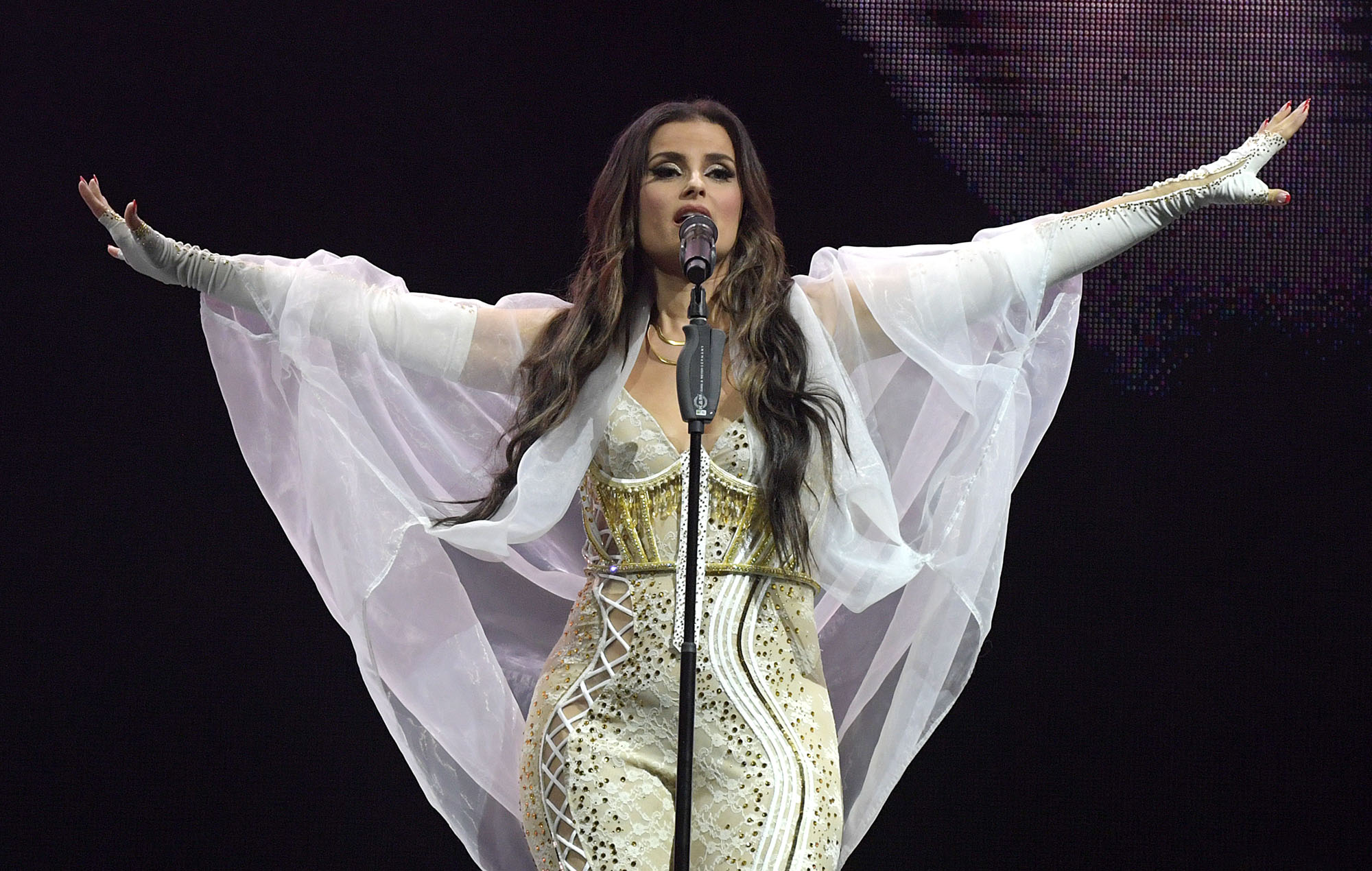 photo: martin philbey · cc by 2.5 ↗
Nelly Furtado
sourcesThe FADER — The Magical Story Of How Nelly Furtado And Timbaland Made Loose (Ray of Light as template, electro-rock, production choices) · Notable Biographies — Nelly Furtado (family background, Time magazine Brazilian-music quote, 'Fadista!' anecdote) · Encyclopedia.com — Furtado, Nelly (Portuguese heritage, Amália Rodrigues and Caetano Veloso as influences) · The Globe and Mail — Whoa, Portugal! She's ours (2001) (Portuguese reception, dual-identity quote) · Wikipedia — Nelly Furtado (citation trail for the 'I wanted to be Ani DiFranco' quote, originally a 2002 St. Petersburg Times interview) · WhoSampled — Island of Wonder (confirms the sample of Caetano Veloso's 'Tonada de Luna Llena')
Nelly Furtado's mother filled their Victoria, British Columbia living room with two things at once: Roman Catholic choir practice and records of Portuguese fado. Furtado, born in 1978 to Azorean immigrant parents, absorbed both alongside the hip-hop and trip-hop she was chasing by age twelve. At fourteen she found Ani DiFranco and briefly wanted to become her; later she found Amália Rodrigues and Caetano Veloso, whose Portuguese she could actually understand. Whoa, Nelly! (2000) scrambled fado, bossa nova and rap into a restless debut; Folklore (2003) turned toward Portugal directly, until a Lisbon crowd shouted "Fadista!" at her. Loose (2006), built with Timbaland on the model of Madonna's Ray of Light, made her a global pop fixture without asking her to settle on one identity.
the sound in question
2006
PromiscuousNelly Furtado
walk the tributaries ↓
Madonna1980s-90s · Pop / Dance-pop / Dance / Electronic
By 2005, Furtado was years removed from a folk-inflected debut and needed a way back into pop's center. She found it in a decade-old record: "I used Madonna's Ray of Light as a template for Loose," she told the music site FADER, "she was smooth but sexy, universal, epic, iconic!" Working with the producer Timbaland, she chased that same fusion of electronic sophistication and physical heat, and the pair kept the sessions' rougher discoveries rather than sanding them down — "the distortion, the weird shit, we left it all on there," as she put it.
listen: upstream & here
1998
Ray of LightMadonna
2006
Say It RightNelly Furtado
listen for"Ray of Light" buries Madonna's voice in a churning wall of trance synths and a beat that never lets up, yet the vocal stays intimate, almost murmured against the rush. "Say It Right" borrows the same trick: a glassy, hypnotic synth pulse cycles under Furtado's hushed, close-mic'd verses, so the track feels enormous and whispered at once. Neither song lets the electronics swallow the vulnerability in the vocal — that balance is the specific inheritance.
Caetano Veloso1960s-70s · Tropicália / MPB / Bossa nova / Experimental rock
Furtado has called Brazilian music her single greatest inspiration, telling Time's Christopher John Farley, "I love Brazilian music, not just because it's sung in Portuguese, which I understand and speak, but because it's got all these great rhythmic elements." Caetano Veloso became her model for that sophistication — so directly that for 2003's Folklore she built "Island of Wonder" from a sample of his 1994 recording "Tonada de Luna Llena," sent it to him, and was startled when he wrote back wanting to sing on it himself. Years later, a shortened tour sent her into a playwriting course, and she began drafting a stage play about him.
listen: upstream & heresource: CityNews 1130 — Nelly Furtado writing stage play on Caetano Veloso (playwriting course, Island of Wonder collaboration) ↗
1994
Tonada de Luna LlenaCaetano Veloso
2003
Island of WonderNelly Furtado
listen forVeloso's 1994 "Tonada de Luna Llena" is a hushed, string-laced ballad, his baritone floating over a guitar figure adapted from a Venezuelan folk song. "Island of Wonder" lifts that same recording as its bed, then layers Furtado's voice in harmony over Veloso's own — his original vocal is still audible underneath hers. It's the rare influence you can hear literally: one recorded voice, carried into a new song instead of merely imitated.
Ani DiFranco1990s · Folk rock / Alternative rock / Folk
Furtado didn't hedge about her teenage hero: "When I was a teenager, I wanted to be Ani DiFranco," she has said. "I never wanted to be part of corporate music." DiFranco had spent the decade proving a folk singer could run her own label, Righteous Babe Records, instead of waiting for a major to sign off — a model of refusal Furtado absorbed years before she had a contract to refuse. AllMusic later heard the residue directly in her debut, describing Whoa, Nelly! as pairing "a folkie sensitivity with a visceral pop sensibility," DiFranco's anti-polish stance filtered through hip-hop and world music rather than acoustic guitar.
listen: upstream & heresource: AllMusic — Nelly Furtado biography (critical framing of the Ani DiFranco-indebted 'folkie sensitivity' on Whoa, Nelly!) ↗
1995
Not a Pretty GirlAni DiFranco
2000
I'm Like a BirdNelly Furtado
listen for"Not a Pretty Girl" is just DiFranco's voice over a chopping acoustic guitar, every syllable spoken as much as sung, daring the listener not to look away. "I'm Like a Bird" swaps folk-punk for a light hip-hop shuffle, but the vocal habit survives: Furtado talks through her verses in the same unhurried, conversational cadence before the chorus opens into melody, skipping the vocal-run showboating that dominated pop radio in 2000. The nerve is DiFranco's; the beat is Furtado's own.