walking upstream…
Interpol


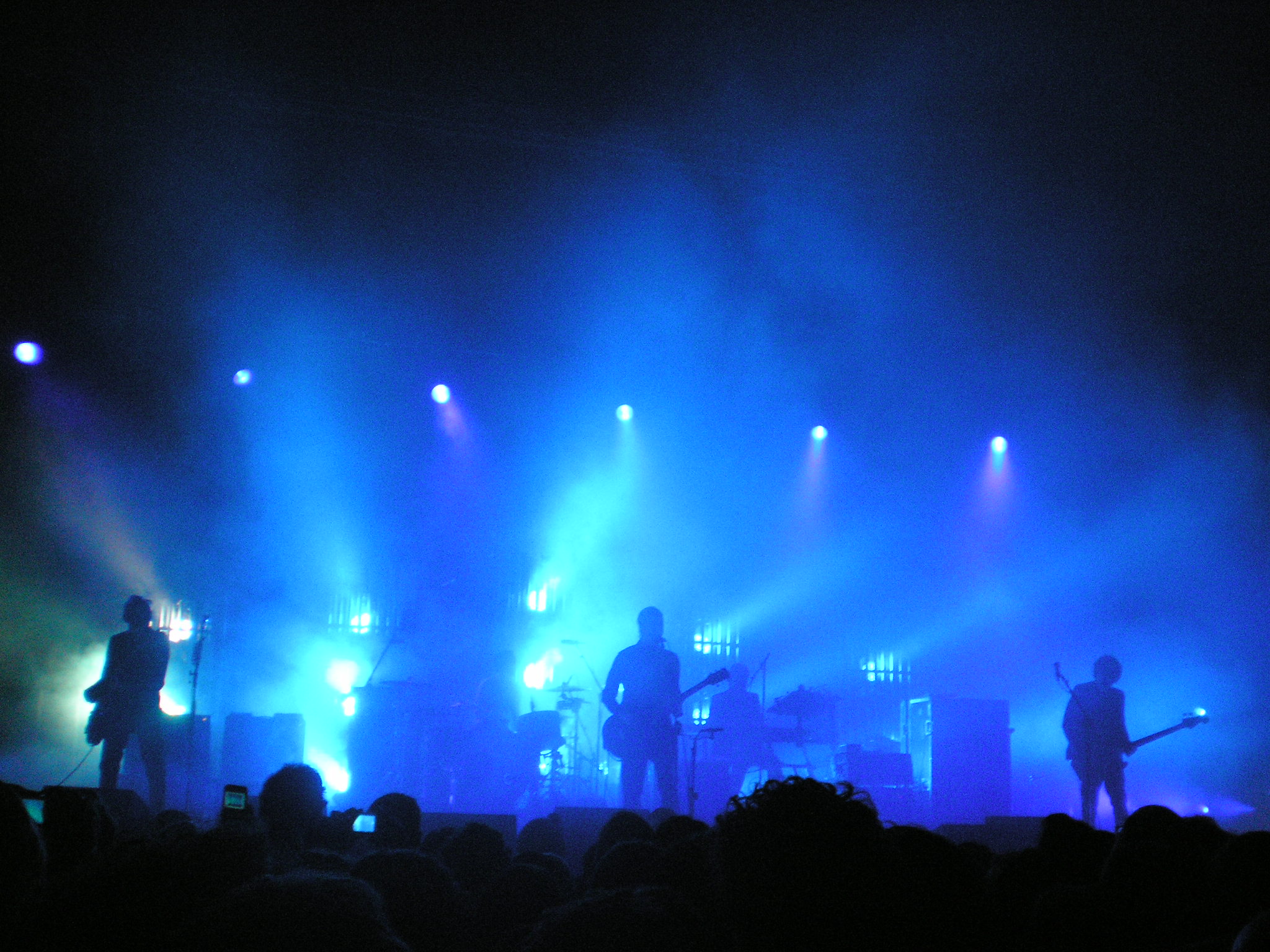 photo: ildiii · cc by-sa 3.0 ↗
Interpol
sourcesWikipedia · Guitar.com
Interpol formed in New York in 1997, coalescing around guitarist Daniel Kessler, singer-guitarist Paul Banks, bassist Carlos Dengler, and drummer Greg Drudy, who was soon replaced by Sam Fogarino. Their 2002 debut 'Turn On the Bright Lights,' released on Matador, became a touchstone of the post-punk revival: interlocking clean guitars, high melodic basslines, and Banks's grave baritone set against taut, propulsive rhythms. Critics reliably invoked Joy Division, a comparison the band found reductive, pointing instead to a wider web of British and New York post-punk. They refined the formula on 'Antics' and the major-label 'Our Love to Admire,' weathering Dengler's 2010 departure to remain, across later albums, one of the defining acts to emerge from early-2000s downtown New York.
the sound in question
2002
Obstacle 1Interpol
walk the tributaries ↓
Joy Division1970s-80s · Post-punk / Gothic rock
The comparison shadowed Interpol from the start, driven largely by Paul Banks's deep, declamatory baritone and the band's high, melodic basslines over spare, driving drums. Kessler has pushed back on it as reductive, naming many other reference points, while acknowledging that certain textures — and Banks's voice in particular — invite it. The kinship is less imitation than a shared architecture: emotion delivered flat and controlled, guitars kept clean and angular, a rhythm section built to propel rather than swing.
listen: upstream & heresource: Under the Radar ↗
1979
DisorderJoy Division
2002
PDAInterpol
listen forPlay Joy Division's 'Disorder' against 'PDA': both ride a restless, high bassline and a hurtling beat while the vocal stays measured and grave, the tension built from repetition rather than release.
Television1970s · Art punk / Proto-punk / Post-punk
Interpol's defining feature is the interplay of two clean electric guitars — Kessler's chiming figures answered by Banks's rhythm parts — a New York lineage that runs straight back to Television's twin-guitar counterpoint. Rather than layering distortion, both bands build songs from interlocking single-note lines that circle and answer each other, treating the two guitars as equal voices in a conversation.
listen: upstream & here
1977
Marquee MoonTelevision
2002
Say Hello to the AngelsInterpol
listen forSet Television's 'Marquee Moon' beside 'Say Hello to the Angels': in each, two clean guitars weave separate but linked melodic lines over an insistent beat, the arrangement driven by their braided counterpoint rather than by chords.
The Chameleons1980s · Post-punk / Neo-psychedelia / Gothic rock
Critics and the band alike trace Interpol's atmospheric side to the Chameleons: the same reverberant, chorus-and-delay guitar washes and the trick of making melancholy sound expansive rather than small. The debt is in texture and mood — big, ringing guitar beds under a plaintive vocal — and Interpol have been named among the bands that most audibly carried the Chameleons' sound forward.
listen: upstream & here
1983
Second SkinThe Chameleons
2002
NYCInterpol
listen forCompare the Chameleons' 'Second Skin' with 'NYC': both open out into wide, echo-drenched guitar figures that shimmer over a steady pulse, the mood mournful but the sound cavernous and enveloping.