walking upstream…
Glassjaw

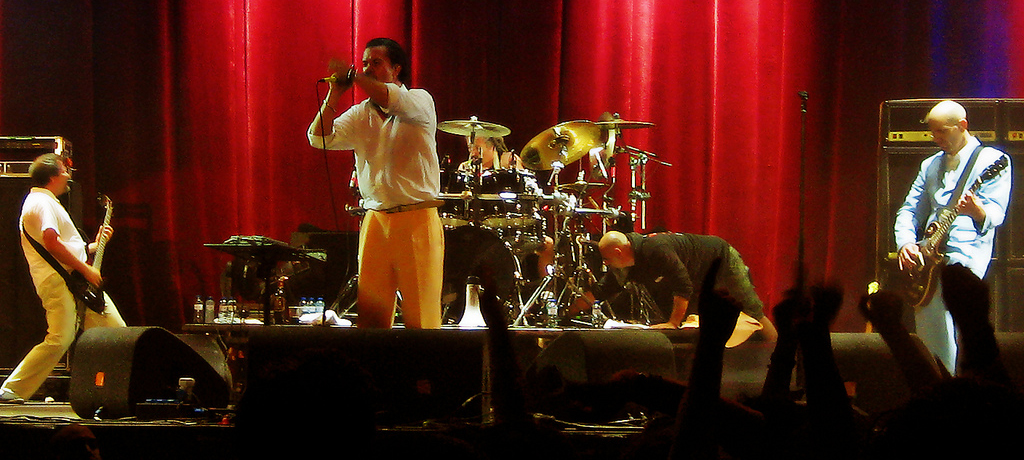

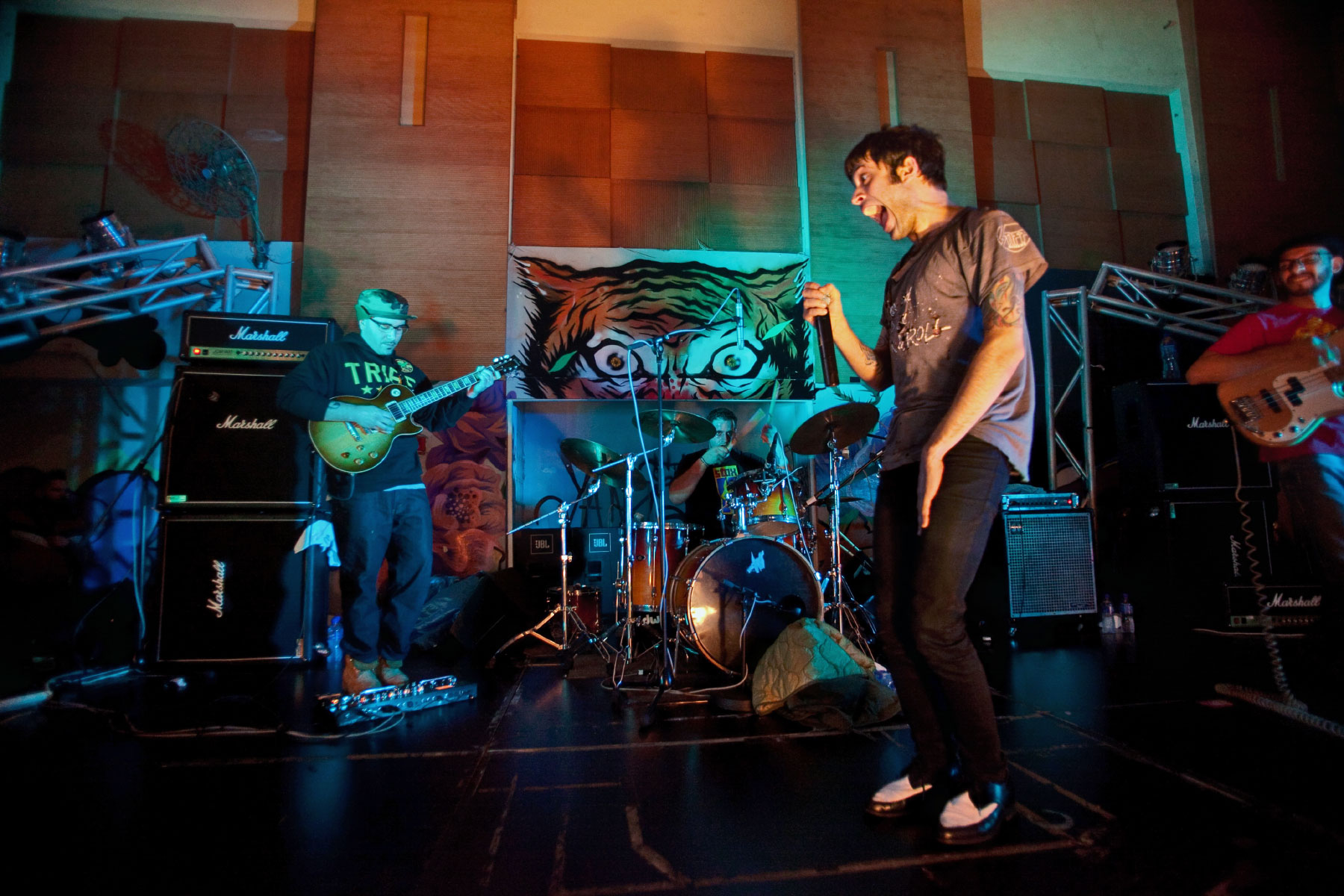 photo: tommy au · cc by 2.0 ↗
Glassjaw
Formed in Hicksville, Long Island in 1993 by vocalist Daryl Palumbo and guitarist Justin Beck, Glassjaw treated post-hardcore as an elastic, unstable material rather than a fixed style — Palumbo's voice lurching from a bruised falsetto to a full-throated shred inside a single bar. Everything You Ever Wanted to Know About Silence (2000) and Worship and Tribute (2002) became blueprints for a generation of bands chasing hardcore's tension without giving up melody or genuine strangeness. Only two full albums and a scatter of EPs emerged across three decades, but the band's operatic instability — health crises, hiatuses, lineup upheaval — only deepened the mythology.
the sound in question
2000
Ape Dos MilGlassjaw
walk the tributaries ↓
Bad Brains1980s · Hardcore punk / Reggae / Jazz fusion
Palumbo and Beck met as summer-camp counselors wearing each other's favorite band's shirt — Palumbo in Bad Brains — and Palumbo has since called them his favorite heavy band outright. Their hardcore-turned-on-a-dime velocity and raw vocal violence gave Glassjaw a chassis to bolt genre-hopping songwriting onto; Worship and Tribute even lifts a line from a Bad Brains song on "Piano" as a direct homage.
listen: upstream & heresource: KindaMuzik interview — Palumbo names Bad Brains, Faith No More, Anthrax as influences ↗
1980
Pay to CumBad Brains
2002
Tip Your BartenderGlassjaw
listen forThe way "Tip Your Bartender" detonates without warning into a full-sprint hardcore blast — the same reggae-to-thrash gear change Bad Brains pioneered, just compressed into Glassjaw's more claustrophobic mix.
Faith No More1990s · Alternative metal / Funk metal / Experimental rock
Asked directly about influences, Palumbo named Bad Brains, Faith No More, and Anthrax; separately, Beck has pointed to Faith No More's genre-agnostic attitude as formative, and Palumbo has called Mike Patton's vocal range a personal touchstone — the reason Glassjaw's songs can lurch from croon to shriek without warning.
listen: upstream & heresource: KindaMuzik interview — Palumbo names Bad Brains, Faith No More, Anthrax as influences ↗
1989
EpicFaith No More
2002
Cosmopolitan BloodlossGlassjaw
listen for"Cosmopolitan Bloodloss" swinging from a delicate falsetto hook into a full-throated scream inside one bridge — the same vocal shape-shifting Patton brought to "Epic," just aimed at a more claustrophobic post-hardcore frame.
Fugazi1990s · Post-hardcore / Punk rock
Glassjaw is cited alongside Fugazi and Hüsker Dü as bands that "shaped, bent and twisted" post-hardcore rather than settled into it, and Fugazi's own dynamics-over-volume songwriting — long quiet builds detonating into brief, controlled chaos — maps directly onto how Glassjaw structures its verses and choruses.
listen: upstream & heresource: Everything Is Noise — Worship and Tribute retrospective (Bad Brains homage on "Piano", Fugazi comparison) ↗
1988
Waiting RoomFugazi
2000
Siberian KissGlassjaw
listen forThe slow-building menace of "Siberian Kiss," where Palumbo's hushed verse coils for nearly a minute before the song snaps — straight out of the Fugazi playbook of tension held and then spent, rather than volume alone.