walking upstream…
Damian Marley
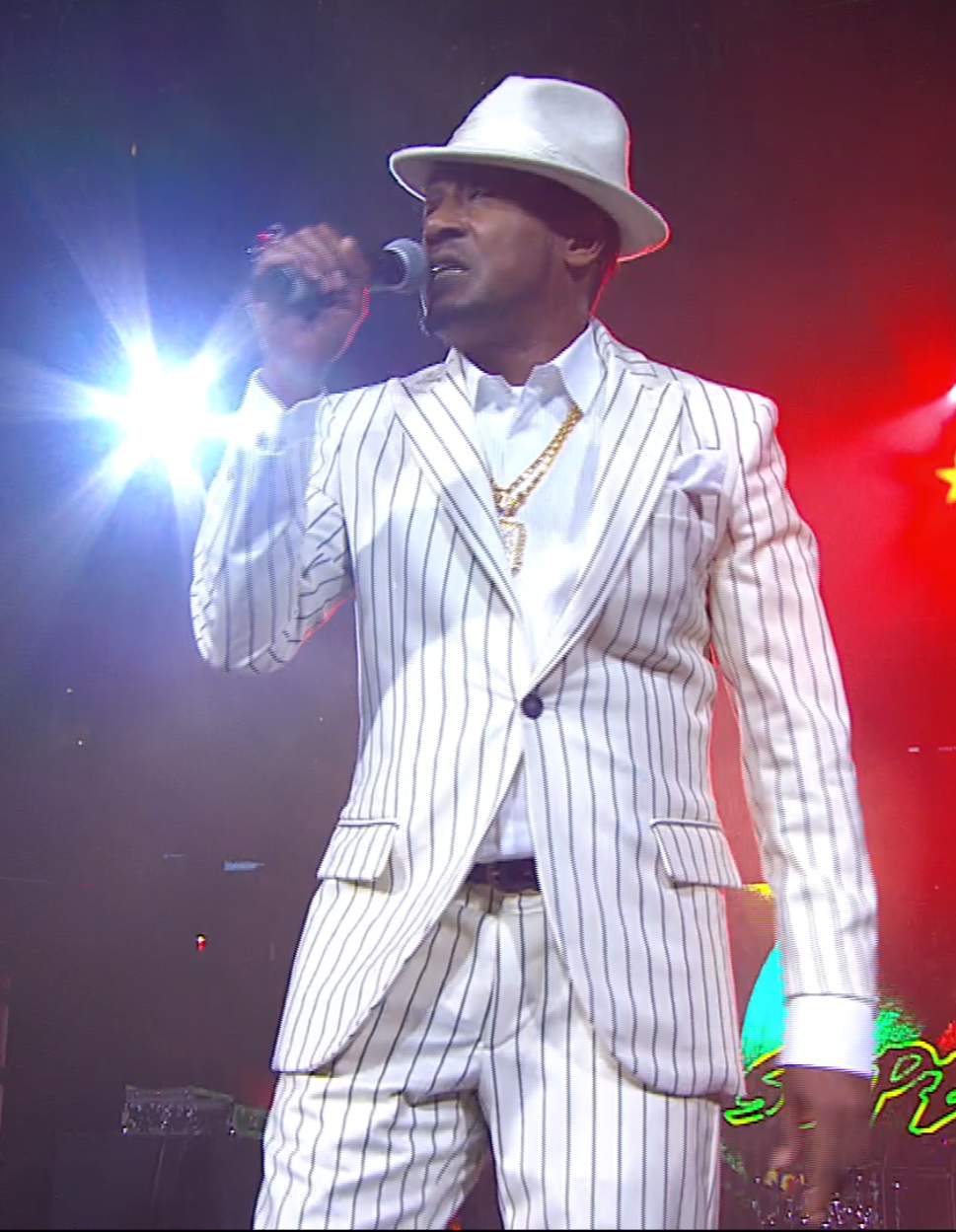


 photo: caspiax · public domain ↗
Damian Marley
sourcesWikipedia
Damian Marley was two years old when his father Bob Marley died, so the reggae inheritance he carries came less from direct tutelage than from growing up inside the extended Marley family's Kingston orbit, steeped in Rastafari conviction and backed, when it mattered, by Tuff Gong, his father's label. His 1996 debut 'Mr. Marley' startled listeners by favoring dancehall deejaying over song; by 'Halfway Tree' (2001) and the Grammy-sweeping 'Welcome to Jamrock' (2005) he'd fused that patois chat with roots reggae, hip-hop, and R&B into something distinctly his own. 'Distant Relatives' (2010), a full-length collaboration with Nas, and 2017's 'Stony Hill' extended his run as reggae's most restless formal experimenter, unwilling to let dancehall and roots be treated as separate traditions.
the sound in question
2005
Welcome to JamrockDamian Marley
walk the tributaries ↓
Super Cat1990s · Dancehall / Reggae
In the same breath as Shabba Ranks, Marley has named Super Cat as one of the 1980s dancehall deejays he grew up watching and buying records by. It shows up less in vocal tone than in subject matter: a willingness to let a tough, badman-postured dancehall track carry real social conscience underneath the swagger.
listen: upstream & heresource: Independent Philly ↗
1985
Cry Fi De YouthSuper Cat
2005
ConfrontationDamian Marley
listen forLine up 'Cry Fi De Youth' with 'Confrontation' — both trade pure braggadocio for a harder, almost sermon-like address to the listener, using a hard dancehall cadence to talk about kids dying in the streets rather than to boast.
Bob Marley1970s · Reggae / Roots reggae / Ska
Bob Marley died when Damian was two, so this isn't an influence passed hand to hand — it's a legacy inherited through the family name, the Tuff Gong label, and a Rastafarian worldview Damian was raised inside rather than taught directly. It surfaces as an unembarrassed willingness to put prophecy and politics into dance music, chasing his father's habit of making righteous anger sound like a hook.
listen: upstream & here
1980
Zion TrainBob Marley
2005
Road to ZionDamian Marley
listen forSet 'Zion Train' beside 'Road to Zion' — both ride a loping, chant-like roots-reggae pulse toward the same destination, Zion, treating the word less as geography than as a promise repeated until it sounds inevitable.
Shabba Ranks1990s · Dancehall / Reggae
Marley has named the 1980s dancehall scene he watched as a kid at concerts — Shabba Ranks foremost among the deejays he cites — as formative to his own decision to chat rather than sing. It shows up as raw vocal texture: a raspy, driving delivery built for a soundclash crowd rather than a radio ballad.
listen: upstream & heresource: Independent Philly ↗
1990
Dem BowShabba Ranks
2005
Move!Damian Marley
listen forCompare 'Dem Bow' with 'Move!' — both let the deejay's voice thicken and accelerate as the track goes, chasing momentum over melody until the chat itself becomes the rhythm instrument.